
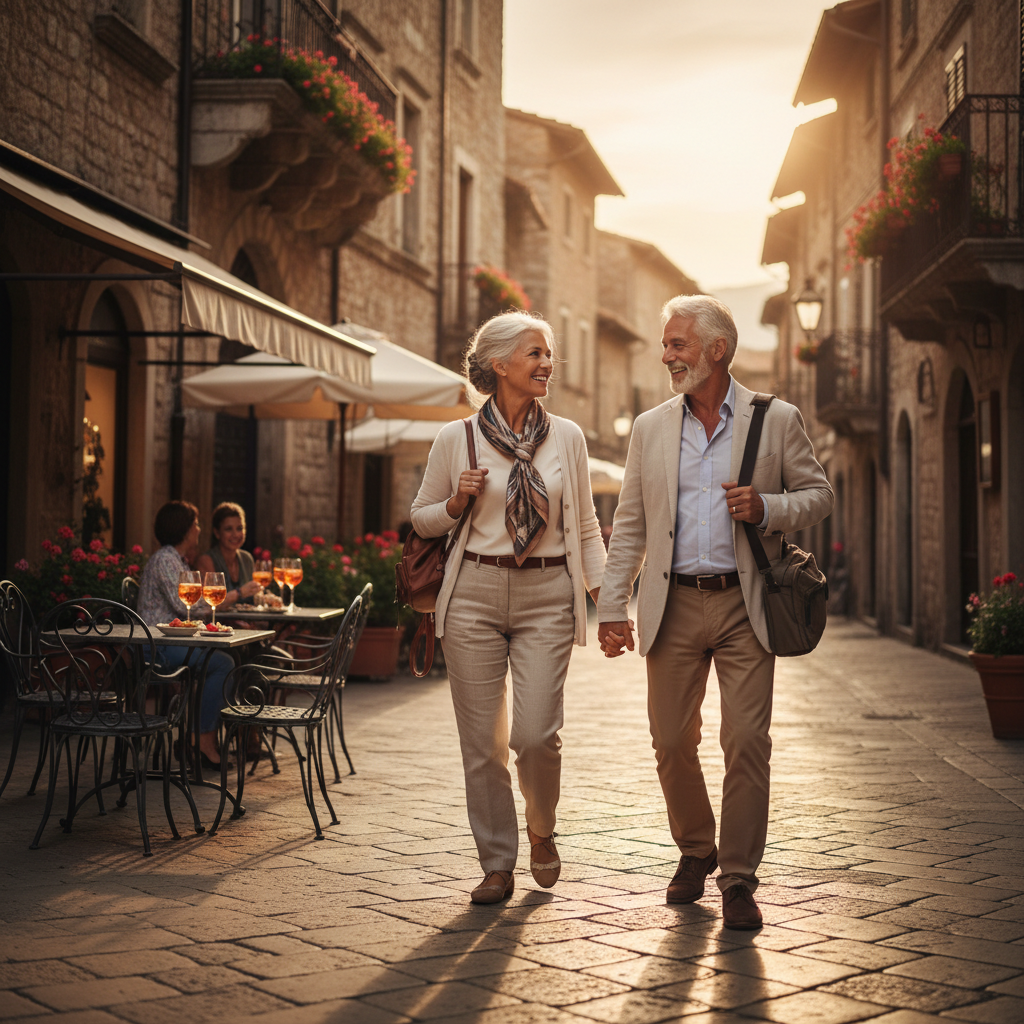
My daughter called it a "phase." My son called it "concerning." My doctor called it "brilliant."
I booked sixteen days in Lisbon and the Alentejo region of Portugal in the spring of 2024, seven months after my 72nd birthday. I had never traveled internationally alone. I had barely traveled without my late husband, Frank, who handled everything from passports to parking. I spoke zero Portuguese.
Here is everything that surprised me.
1. The Fear Was Almost Entirely Pre-Trip
I spent the three weeks before departure catastrophizing. What if I got lost? What if my medications were stolen? What if I had a health emergency? What if the flights were delayed?
The AARP Travel Center has a practical guide on solo senior travel that addresses exactly these fears. It's worth reading before you book, not to scare you, but to give you a realistic action plan. My actual trip had zero emergencies, one missed turn, and one memorable afternoon completely, blissfully lost in a white-walled village that turned out to be one of the most beautiful places I've ever seen.
2. Portugal Is Specifically Wonderful for Seniors
I chose Portugal based on a recommendation from my neighbor, and the research confirmed it. The World Health Organization consistently ranks Portugal among the top countries for quality of life and healthcare access for older adults. Public transport in Lisbon is excellent. Sidewalks in the historic districts are cobblestone, so wear very good shoes, but the city is remarkably walkable at a gentle pace. Portugal also consistently earns high marks in the Global Quality of Life Index for safety and ease of daily living, which matters when you're navigating somewhere new on your own.
3. A Small-Group Tour for Part of the Trip Was the Right Call
I'm an independent person. I didn't want to be herded around on a bus. But I also didn't want to rent a car alone in a foreign country. My compromise: I booked four days with a small-group tour through the Alentejo wine region, groups of ten or fewer, and did Lisbon entirely on my own. Organizations like Road Scholar specialize in educational travel for adults 50 and older and have rigorous safety and accessibility standards. Having that built-in structure for just part of the trip gave me confidence for the rest of it.
4. Travel Insurance Is Not Optional
I purchased comprehensive travel insurance through InsureMyTrip, which compares plans across providers. My plan included medical evacuation coverage up to $500,000, because Medicare does not cover international medical care. This is a non-negotiable for any American traveling abroad over 65. The CDC has a detailed travel health guide for older adults that I bookmarked and read before departure. It's genuinely useful, not just a list of scary statistics.
5. I Slept Better Than I Have in Years
I don't fully understand this one. Maybe it was the walking. Maybe it was the absence of my usual routine. Maybe it was the Atlantic air. Whatever the reason, I slept eight hours a night in Lisbon and woke up without an alarm feeling rested in a way I haven't experienced since before Frank's illness. Research on travel and sleep suggests that physical activity and novel environments can genuinely reset our sleep patterns. I believe it now.
6. People Were Extraordinarily Kind
I had been warned, gently, by well-meaning people, about pickpockets, scams, and the general hazards of being an older woman traveling alone. I met none of that. I met a retired teacher who walked me to my guesthouse when I was turned around. I met a café owner who brought me an extra pastel de nata because I'd been sitting reading for two hours and "looked like you needed another one."
7. I Came Home a Different Person
This sounds dramatic. It isn't. After two years of being in my house, being careful, being *fine*, I came home from Portugal knowing that I am not done. I am nowhere near done.
I'm going to the Azores in October. My daughter is talking about joining me.
---
*Travel medicine consultations with your physician are recommended 4–6 weeks before international travel. The CDC's Travelers' Health portal has destination-specific health advice.*