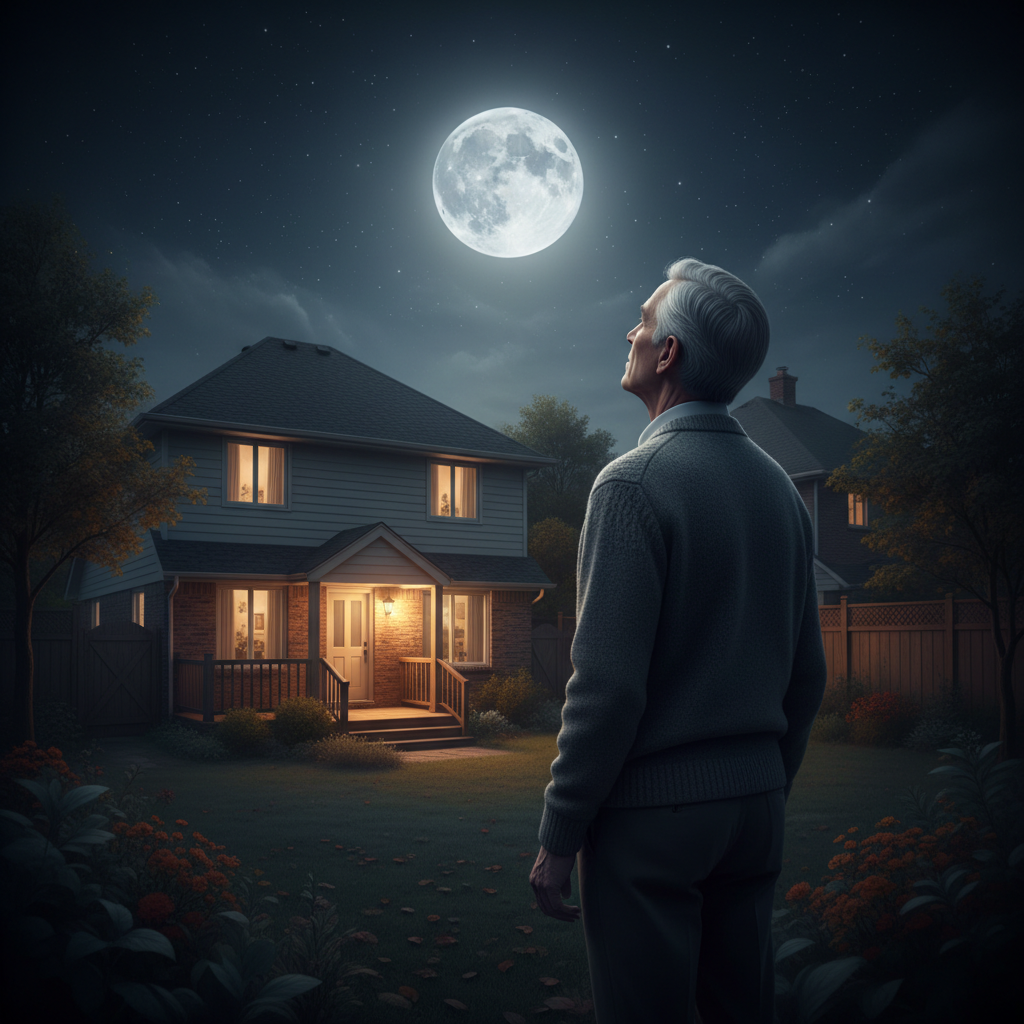
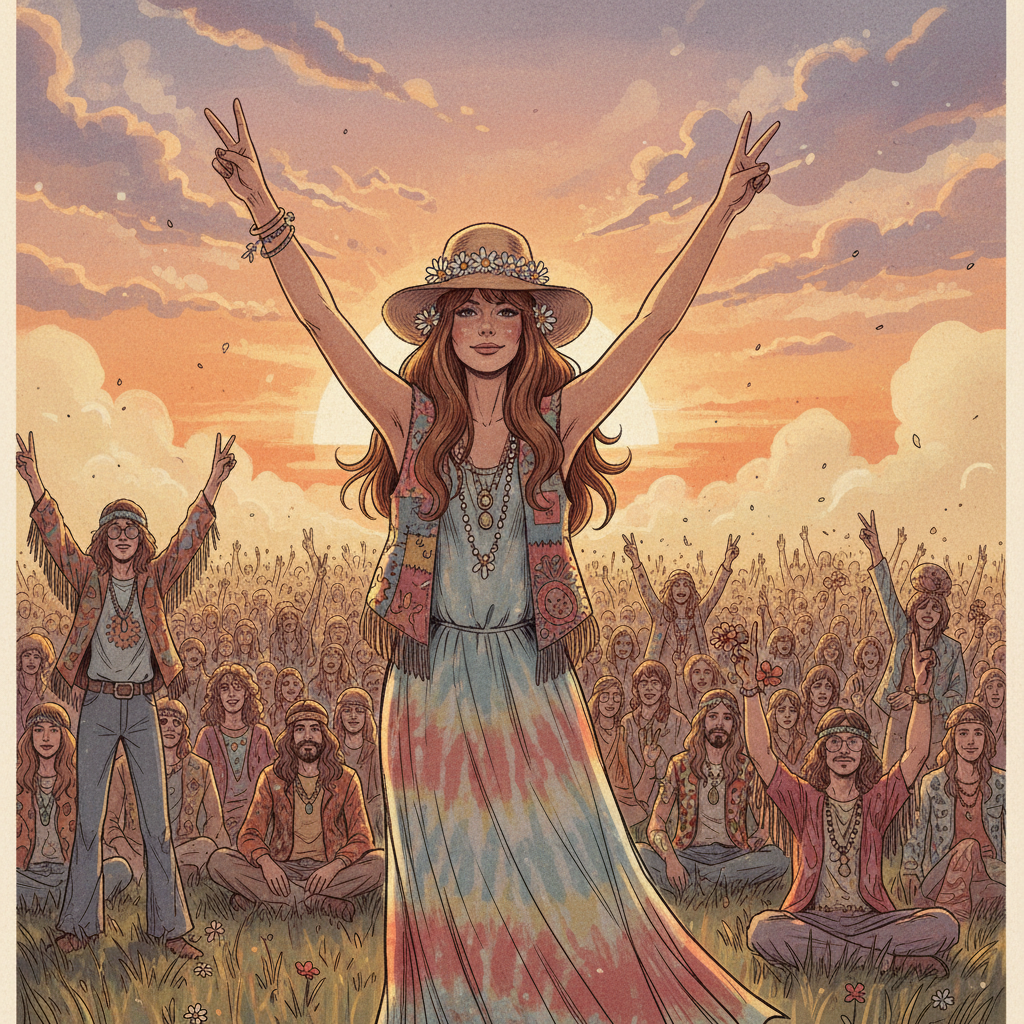
I did not go to San Francisco in the summer of 1967.
I was seventeen, living in Detroit, working at my uncle's hardware store and saving money for college. My mother would have had a great deal to say about me going to San Francisco. The conversation would have been brief and conclusive.
But I felt it from there. Everyone did. The Summer of Love arrived through the music, through the magazines, through the particular electricity in the air that year. Something was happening in America that was different from what had come before. More colorful, louder, stranger, more insistent in its questions.
The questions are what I remember most.
What the Counterculture Was Actually Asking
The 1960s counterculture is often reduced, in retrospect, to its most picturesque elements: flowers and beads and psychedelic posters and young people being irresponsible. That reduction is understandable and almost entirely wrong.
The counterculture was, at its core, a philosophical challenge. It was asking: does life have to be organized around conformity, consumption, and deference to authority? Does adulthood have to mean abandoning curiosity? Can community be built on values other than competition?
Some of those questions were naive. Some were brilliant. Most were both.
Timothy Leary, the Harvard psychologist who became the most famous advocate for LSD experimentation, urged a generation to "turn on, tune in, drop out." The advice was irresponsible in its specifics, but it was onto something real in its general direction. The idea that consciousness itself was worth examining, that the unexamined life of American consumerism might not be enough, that was not nothing.
Allen Ginsberg, the poet whose 1956 work "Howl" is considered one of the founding documents of the counterculture, was asking questions about authenticity, suffering, and the cost of conformity that American poetry had not previously been asking out loud.
The Haight-Ashbury Experiment
In the winter of 1966 and into 1967, young people began migrating to the Haight-Ashbury neighborhood of San Francisco from across the country. By the summer of 1967, an estimated 100,000 young people were there, far more than the neighborhood could absorb or support.
What emerged was messy and inspiring in roughly equal measure. Free clinics appeared to treat people who had no money and no health insurance. The Diggers, a radical street theater group, provided free food daily in Golden Gate Park. Community kitchens, crash pads for runaways, improvised social services created by people who had decided that the existing systems weren't working and something needed to fill the gap.
Sociologist Howard Becker, writing about the period, observed that what Haight-Ashbury demonstrated, amid all its chaos, was the human capacity for spontaneous community formation. Given a shared value system and a concentrated population, people will create institutions to take care of one another.
It also demonstrated that idealism without infrastructure tends to collapse under the weight of its own contradictions. By the fall of 1967, the original residents of Haight-Ashbury were staging a mock funeral for the "Death of the Hippie," acknowledging that the media attention and mass migration had transformed their experiment into a tourist spectacle.
The Music That Summer
The Monterey Pop Festival in June 1967 was the first major rock festival, and it introduced mainstream America to Jimi Hendrix, Janis Joplin, and Otis Redding. The music coming out of San Francisco that summer, from bands like the Grateful Dead, Jefferson Airplane, and Big Brother and the Holding Company, was genuinely different from what had come before: longer, more experimental, less concerned with the three-minute pop format.
The Beatles released *Sgt. Pepper's Lonely Hearts Club Band* in June 1967. Music critic Greil Marcus, one of the most important writers on rock and roll, called it the moment when popular music became fully conscious of itself as an art form.
What the Counterculture Left Behind
The counterculture did not overthrow American capitalism, end the Vietnam War by itself, or establish the Age of Aquarius. Those failures are worth acknowledging honestly.
What it did leave behind is more interesting and more durable.
The environmental movement grew directly from the counterculture's critique of industrial society. So did the organic food movement, the natural childbirth movement, and the explosion of interest in Eastern religion and contemplative practice. The women's liberation movement of the late 1960s and early 1970s was deeply intertwined with the counterculture's questioning of traditional roles.
The insistence that corporations should be accountable for their social and environmental impacts, which now seems mainstream, was a fringe counterculture idea in 1967.
Stewart Brand, who organized the Trips Festival in 1966 and later founded the Whole Earth Catalog, is perhaps the clearest example of counterculture ideas becoming mainstream innovation. His work directly influenced the personal computer revolution. Steve Jobs called the Whole Earth Catalog "one of the bibles of my generation."
The Question That Remains
I am 73 now. I went to college, graduated, built a career, raised a family. I did not go to San Francisco in 1967 and I have no regrets about that.
But I have carried the questions with me. Does it have to be this way? Is there another arrangement that serves human beings better? What are we actually for?
Those are not naive questions. They are, I would argue, the most important questions a person can ask. A generation that asked them loudly, even imperfectly, even with flowers in their hair, did something worth remembering.
The world did not become the Summer of Love. But the Summer of Love left fingerprints on the world that have not faded.
I am glad it happened. I am glad I was young when it did.