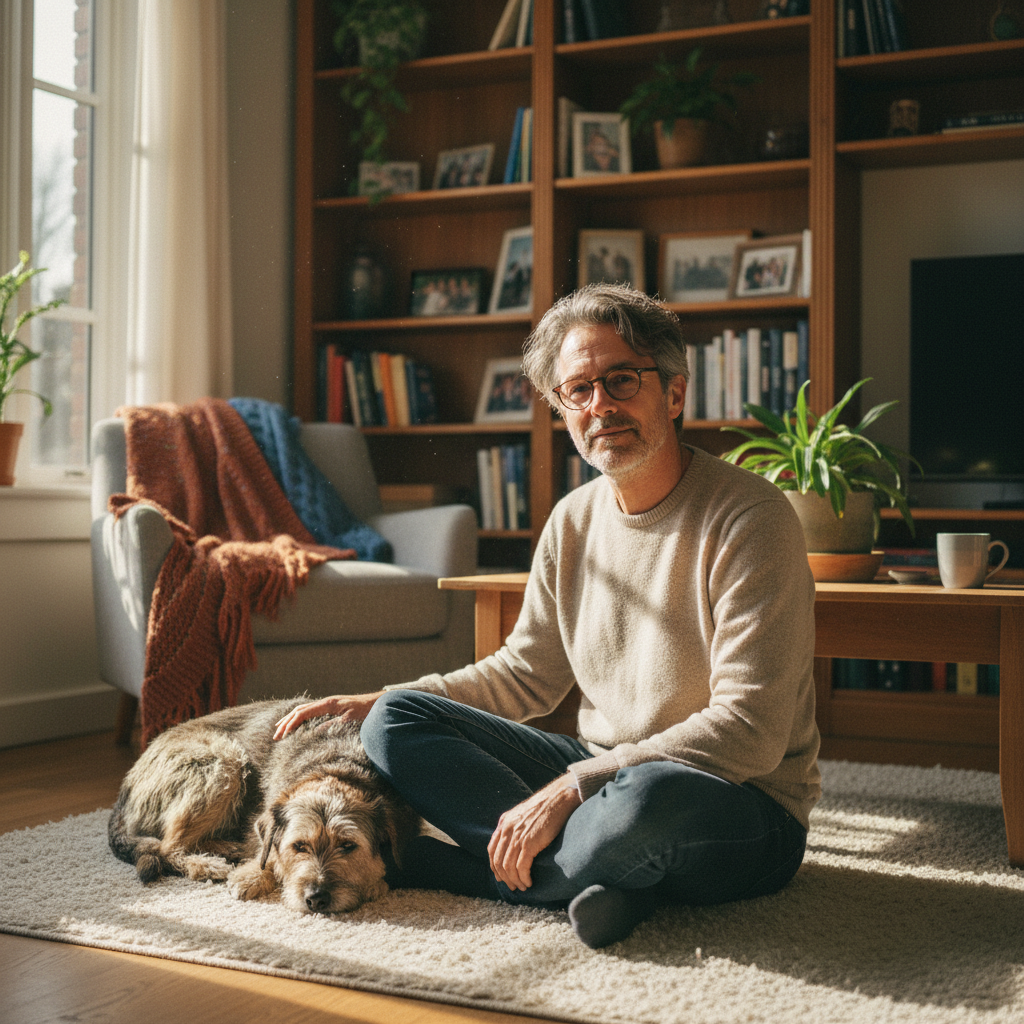
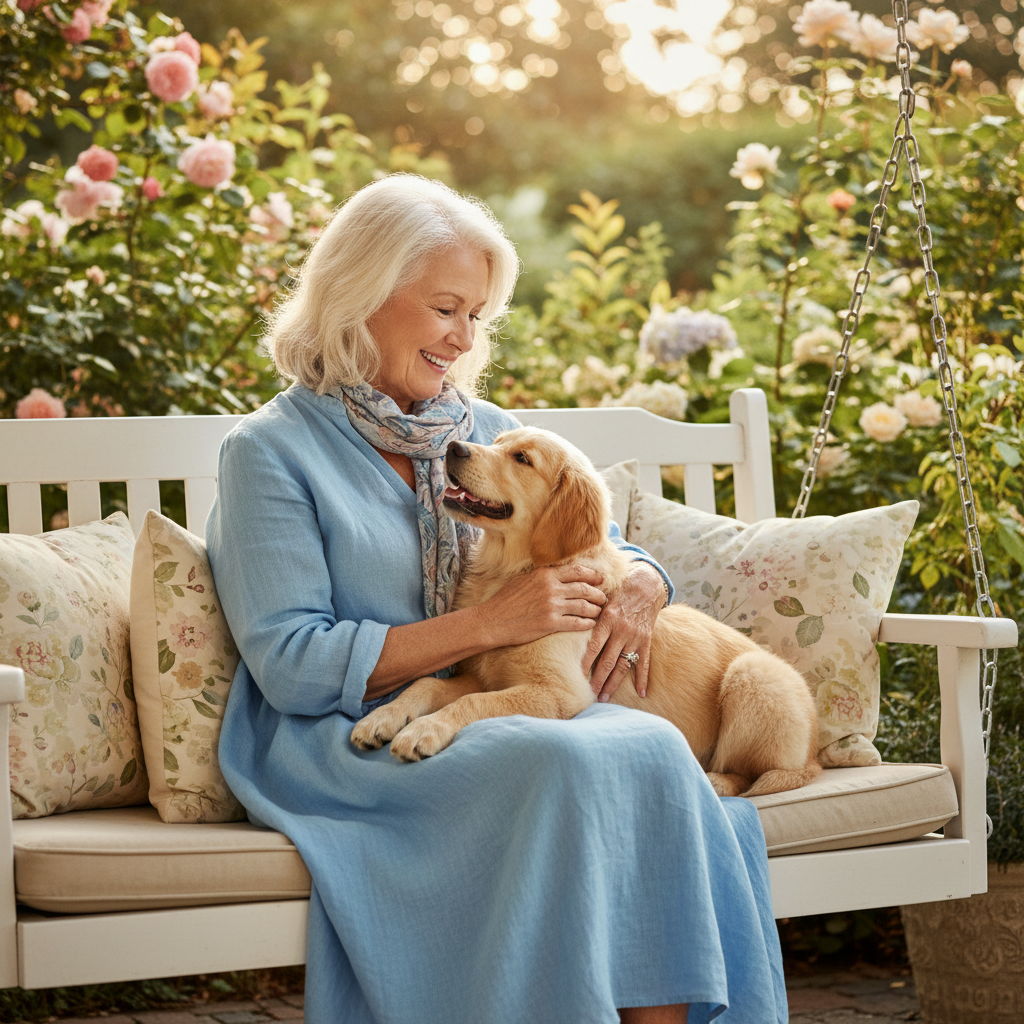
I was not a dog person. I want to say that upfront, because it matters.
For 45 years, my husband Harold was the animal lover in our house. We had two golden retrievers during our marriage, Copper, then Rusty, and both times I was the one who said *fine, but I'm not walking it.* Then Harold died in 2021, and within six months the house got very, very quiet.
My daughter kept sending me articles. One from the American Heart Association said pet owners have lower blood pressure and better heart health outcomes. Another from the National Institutes of Health said companion animals reduce cortisol (that's the stress hormone) and increase oxytocin in older adults. I read them and I said, "I'll think about it."
I thought about it for two years.
The Rescue That Changed Everything
In March 2024, my neighbor Janet dragged me to a local rescue event at the community center. I do mean dragged. "Just look," she said. "You don't have to take anything home."
Biscuit was in a wire crate in the corner. He was eight years old, a beagle mix with a white muzzle and one floppy ear. He'd been surrendered when his owner went into a memory care facility. He looked at me with the most patient eyes I have ever seen on a living creature, and I sat down on the floor next to his crate in my good slacks and said hello.
I took him home that afternoon.
What Nobody Tells You About Senior Dogs
The rescue coordinator told me something I didn't expect: senior dogs are calmer, better trained, and more grateful than puppies. According to the ASPCA, older dogs are less likely to exhibit destructive behavior and are often already house-trained. They described it as "what you see is what you get," with no guessing about adult temperament.
Biscuit knew sit, stay, and the word "walk" on day one. He sleeps 14 hours a day and doesn't chew anything that isn't his. He's perfect.
The Health Benefits Are Real
Here's what happened in the six months after I adopted him:
**I started walking every single day.** Not optional. Biscuit requires it. We do two miles in the morning. The CDC recommends that older adults get at least 150 minutes of moderate-intensity activity per week. Biscuit has me at 210 without trying.
**I started sleeping better.** He curls against my legs at night. There's research from the Mayo Clinic Sleep Network suggesting that moderate amounts of co-sleeping with pets doesn't disrupt sleep in most adults and may reduce anxiety.
**I stopped dreading mornings.** This is the one I can't put a study to. But there is a creature in my house who is genuinely delighted to see me every single day. That matters more than I can say.
The Practical Side
A few things to know if you're considering this:
- **Costs:** Budget roughly $50–100/month for food, $500–800/year for routine vet care. Pet insurance runs $30–60/month and I recommend it. - **Mobility:** If bending down is difficult, ask about dogs who are comfortable with raised food bowls and different leash types. The Humane Society has a helpful guide on matching senior owners with senior pets. - **Allergies:** Hypoallergenic breeds are worth researching. Bichons, poodles, and Portuguese Water Dogs are popular options for sensitive owners.
Biscuit is nine now. His muzzle is very white and he sighs enormously when he has to get up. We understand each other completely.
I was not a dog person. I am now.
---
*The views expressed are my own personal experience. Please consult your physician before significantly increasing physical activity.*