
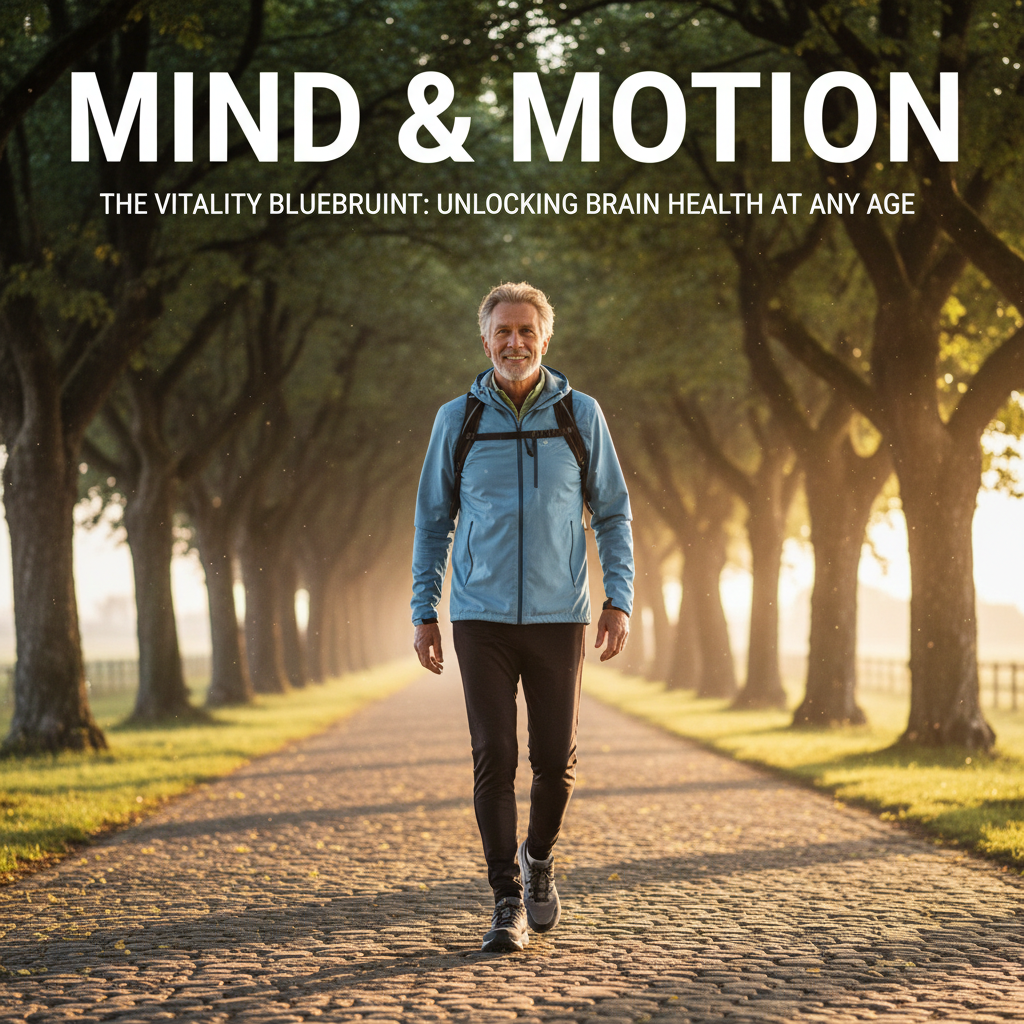
I turned 73 last spring. At my annual check-up, my doctor sent me for a routine cognitive screening, the kind they start recommending in your 70s.
The results came back: cognitively, I was tracking more like someone in their early 60s.
My neurologist looked at me over the results and asked, with genuine curiosity, what I was doing.
Here's my honest, unfiltered answer. Not a miracle supplement, not a dramatic intervention. Just the mundane daily practices I've maintained for the past decade.
1. I Walk Every Single Day
Not intense exercise. Walking. 40 to 60 minutes, every morning before breakfast. Rain, cold, post-surgery with a cane. I find a way.
The research on walking and brain health is some of the most consistent in all of medicine. It increases blood flow to the brain, promotes neuroplasticity, and is associated with significantly lower dementia risk. The CDC notes that regular physical activity in older adults supports brain health and reduces the risk of cognitive decline. It costs nothing and requires nothing.
I have never skipped it for more than three consecutive days in ten years.
2. I Read Physical Books
Not screens. Books. I read for about an hour before bed every night, paper pages, relatively low light. I read widely, fiction, history, science, biography, and I make a point of reading things that are slightly outside my comfort zone.
Deep reading, the kind that requires sustained attention and imagination, exercises cognitive capacities that passive screen consumption simply does not.
3. I Learned Something New in My 60s
At 63, I started learning Spanish. I am not fluent. I am functional. The point was never to become fluent. It was the process of learning itself, which kept my brain forming new connections.
Learn an instrument. Learn a language. Take a college course. The specific subject is less important than the fact of consistent, effortful learning. The National Institute on Aging points to lifelong learning as one of the key habits associated with better cognitive health in older adults.
4. I Have Deep Social Connections
Not many. Deep. I have three friends I speak to weekly, a marriage I actively tend to, and a volunteer commitment that puts me in genuine relationship with people younger and older than me.
Loneliness is one of the strongest predictors of cognitive decline. Connection is one of the strongest protections against it.
5. I Sleep Like It's My Job
Seven to eight hours, same bedtime and wake time, dark room, no alcohol within three hours of sleeping, phone in another room. Sleep is when the brain clears waste, consolidates memory, and repairs itself.
I treated sleep as something to optimize in my 40s. In my 70s, it's non-negotiable. NIH research has shown that sleep plays a critical role in clearing harmful waste products from the brain, including those linked to Alzheimer's disease.
The Honest Caveat
Genetics plays a role. I'm lucky. But the research increasingly shows that lifestyle factors account for a significant portion of cognitive aging, and that it's never too late to start.
None of this is a guarantee. It's a probability shift in my favor. At 73, I'll take every shift I can get.
*This article is for informational purposes only. Consult your physician regarding cognitive health and screening appropriate for your age and history.*