I was the grandmother who called the cell phone the "device." Who handed it back to my daughter when it did anything unexpected. Who had three different neighbors on speed dial to come help me when the internet stopped working, which in my house meant the router blinked an unfamiliar color.
Technology and I had a détente: it stayed over there, I stayed over here, and we respected each other's territory.
Then the world shut down in March 2020 and my grandchildren, who live in Portland, 2,100 miles from my house in Tennessee, became people I could not reach through a screen because I didn't know how to work the screen.
My daughter called me the second day of lockdown and said, simply: "Mom. I'm going to teach you FaceTime right now, or I'm going to lose my mind."
The Three-Day Education
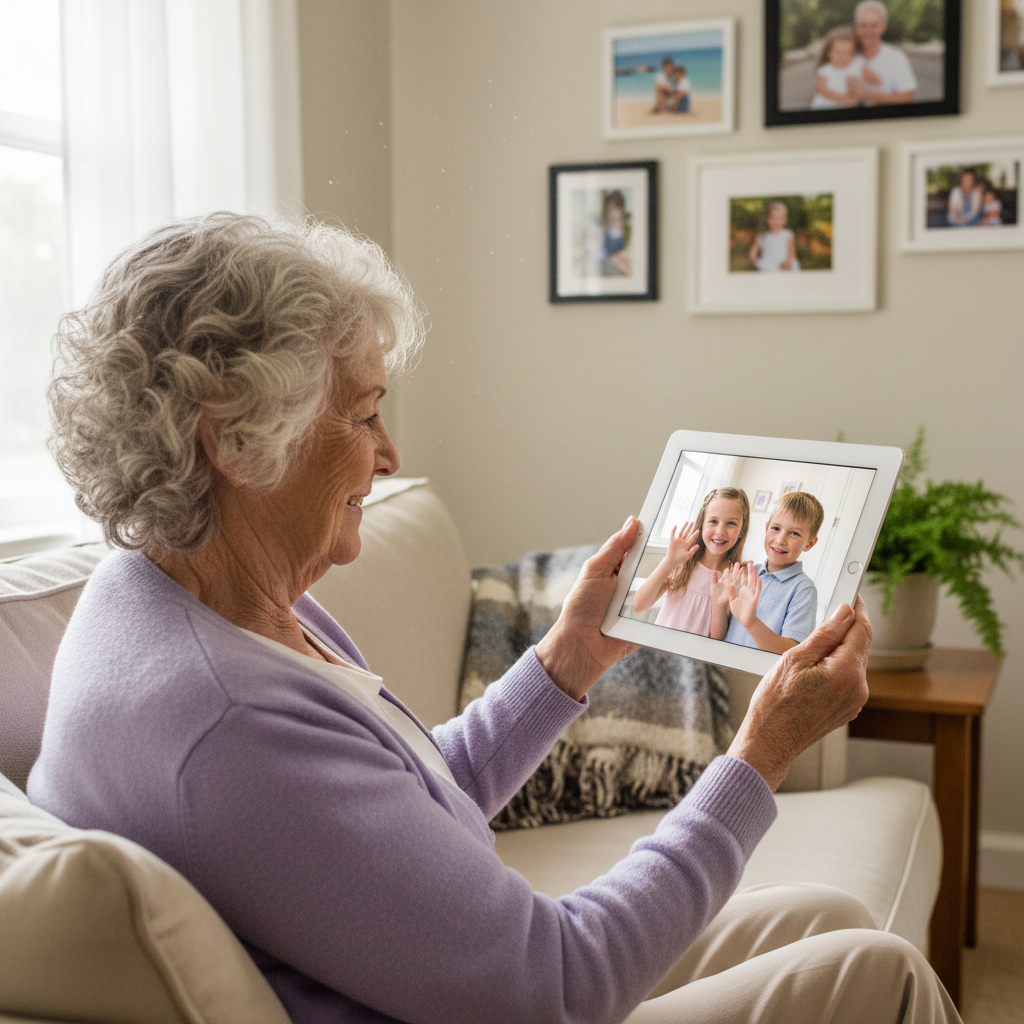
We started over the phone, which feels absurd in retrospect. She walked me through unlocking the tablet she'd given me the previous Christmas, the one I'd used almost exclusively to play solitaire. She made me tap things. She made me tap them again. She was patient in the way only someone who loves you can be when you are testing every atom of that love.
On day three, my seven-year-old granddaughter Emma appeared on my screen. Her face was enormous, far too close to the camera, her eyes huge with excitement.
"GRANDMA," she yelled, "I CAN SEE YOUR WHOLE FACE."
I cried. I'm crying a little now writing this.
What Happened After
We started with weekly calls. Then twice a week. Now, four years later, I talk to Emma and her brother Cooper almost every single day. Brief calls, usually. Ten minutes while they eat breakfast before school, or just before bed on their end. But every day.
I have watched them grow up in a way I never could have at 2,100 miles without this technology. I know their teachers' names, their current obsessions (Emma: horses. Cooper: inexplicably, competitive marble racing), their friend dramas. I know them in a way that grandparents of my generation often simply couldn't know grandchildren who lived far away.
A 2021 AARP study found that older adults who use video calling technology report significantly lower rates of loneliness and stronger feelings of family connection than those who rely only on phone calls. I am, apparently, a data point. And honestly, it doesn't surprise me one bit. There is something about seeing a face, even a too-close, slightly blurry face pressed right up against a tablet screen, that a phone call simply cannot replicate.
What I Want to Tell Other Grandparents Who Are Scared of It
It will feel overwhelming. It will feel embarrassing. You will tap the wrong thing and accidentally end the call twelve times before it becomes natural. This is fine. This is normal. This is a phase. Research from the National Institute on Aging consistently shows that older adults who push through the early frustration of learning new technology are far more likely to stick with it and benefit from it long term.
Call your most patient child or grandchild and ask them to teach you. Do it this week. Do not wait until there is a crisis that takes the choice away from you.
The face on the screen will be worth every bewildering moment of learning.
Emma still holds the camera too close. I've stopped asking her to fix it. I like seeing her that way, every detail of her, enormous and real and right there.