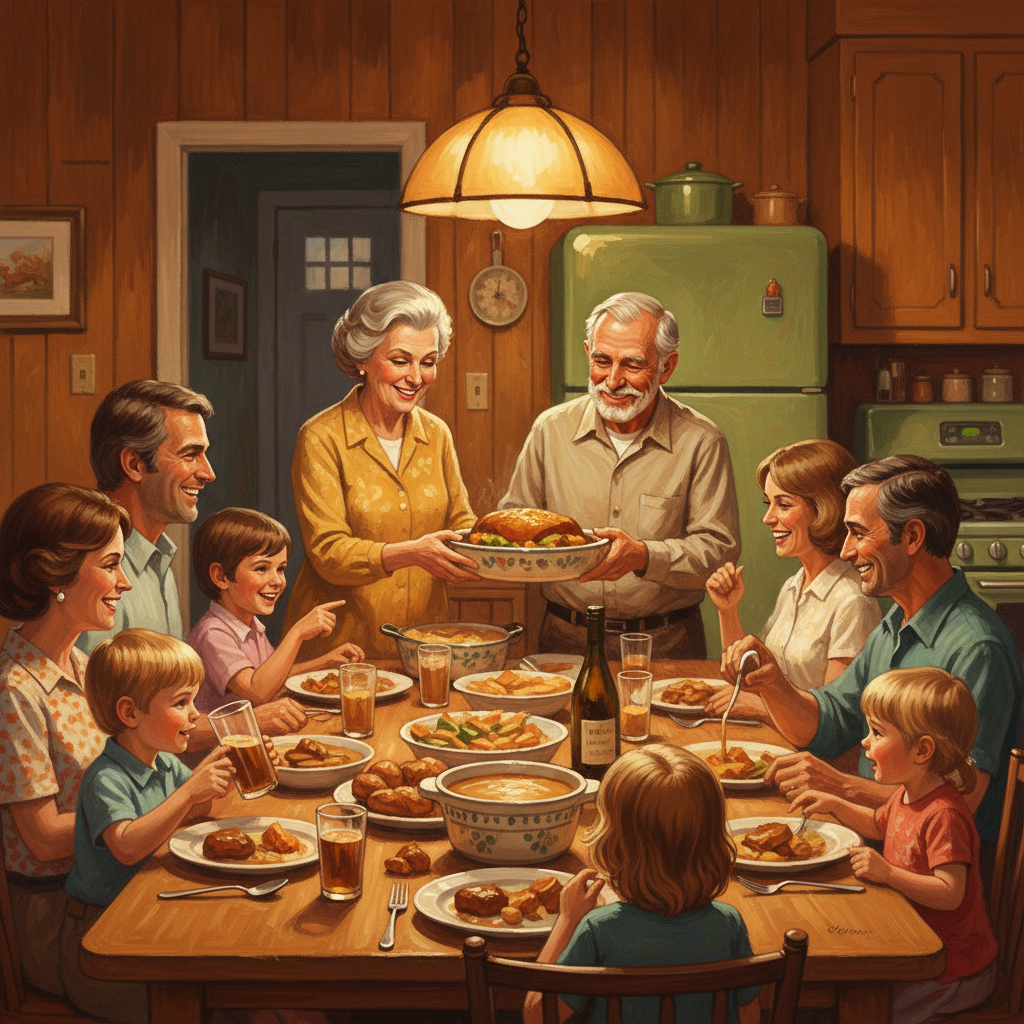
Sunday evenings in our house had a smell.
It was the smell of pot roast that had been in the oven since noon, and Fels-Naptha soap from the laundry done that afternoon, and something like cedar from the blanket chest in the corner of the living room that my grandmother had brought from Kentucky. If I close my eyes, I can still find it. That particular warmth that meant the week was ending, the family was home, and everything would hold together a little while longer.
The living room is where it all happened.
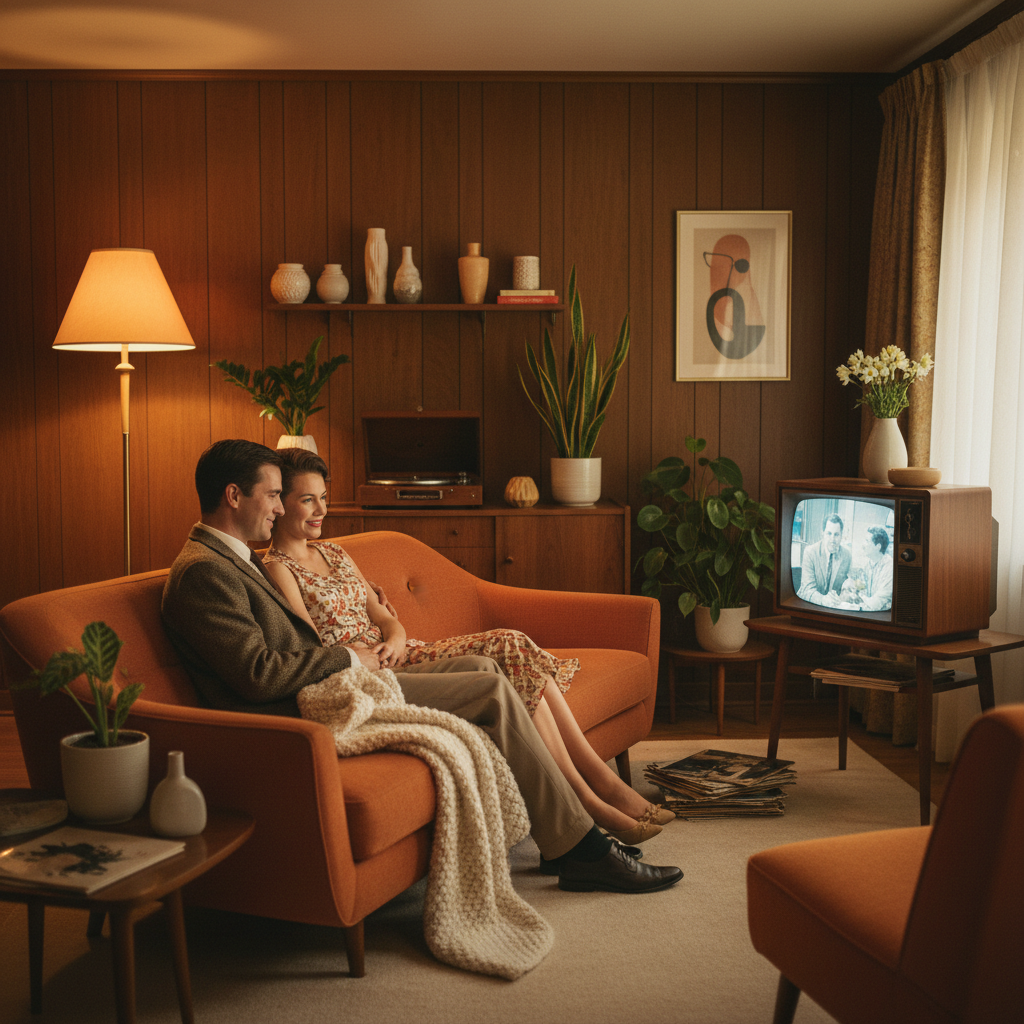
Not the kitchen, though the kitchen had its own magic. Not the backyard, though we spent our summers there. Sunday evenings belonged to the living room. A room that, in the houses of the 1950s and 1960s, was designed with a specific intention: to bring the family together in one deliberate place.
A Room With a Purpose
The mid-century American living room was not accidental. It was a statement.
The furniture faced inward, toward each other and toward the shared focal point of the room, which might be a fireplace, a console television, or simply a low coffee table where things collected: a bowl of fruit, a stack of Life magazines, someone's knitting. The couch was usually long and deep, upholstered in something that wore well. The chairs were positioned for conversation. The lamps were warm.
Everything about the room's design said: sit down. Stay a while. Be here together.
This was not a coincidence. The architectural and interior design movements of the postwar era were explicitly oriented around the domestic ideal of family life as the center of American culture. Houses were built with formal living rooms because the act of gathering as a family was considered important enough to deserve its own dedicated space.
What Happened to That Room
Somewhere in the 1980s and 1990s, the living room began to transform.
Open-concept floor plans dissolved the walls that had made it a sanctuary. The formal living room gave way to the "great room," a multipurpose space where cooking, eating, watching television, and working from home all happened simultaneously in one undifferentiated blur. Screens multiplied and migrated to every corner of the house. The idea of a room specifically designated for togetherness began to seem almost quaint.
I'm not here to argue that the old way was better in every respect. But I do think we gave something up. And I think a lot of us feel its absence without being able to name it.
The research supports this instinct. A 2020 study published in the journal "Environment and Behavior" found that households with designated shared gathering spaces, rooms used specifically for family and social interaction rather than work or media, reported higher levels of social connection and emotional wellbeing. The architecture of a home, it turns out, shapes the relationships inside it.
The Elements That Made It Work
What were the specific qualities of that mid-century living room that made it feel the way it felt? I've thought about this a great deal, and I think it comes down to a few things:
**Warm light.** The lamps of that era were designed to flatter. Amber-toned, soft, directed downward. They made faces look kind and spaces feel intimate. Overhead fluorescent lighting has the opposite effect. If you want your living room to feel the way your grandmother's felt, start with the lamps.
**Textures that invite touch.** Wool throws. Velvet cushions. A braided rug underfoot. The mid-century living room was full of things that felt good, physically inviting in a way that modern minimalism often isn't. The body knows when a room says "sit down" and when it says "admire from a distance."
**A focal point that wasn't a screen.** I know, the console television was the centerpiece of many a 1960s living room. But the television of that era was furniture, a shared experience, something families watched together at scheduled times. It was different from the algorithmic infinity of today's streaming. The fireplace, the bookshelf, the carefully arranged mantel. These things gave the room a center of gravity that didn't demand constant attention.
**The absence of work.** The living room was not where you paid bills or answered mail or fretted over work problems. It was the one room in the house where the business of survival was, by unspoken agreement, set aside. That boundary mattered. Research from the NIH confirms that dedicated spaces for rest and connection have a measurable effect on our mental and emotional health, something our grandparents seemed to understand without needing a study to tell them.
Reclaiming the Sunday Evening
You don't need to redecorate to recapture this. You need a ritual.
In my house, Sunday evenings have slowly become what they were in the houses I grew up visiting. I make something warm, soup, or a simple dessert, or just good coffee. I arrange the living room so the chairs face each other. I put on music, softly, something without words. I turn off the overhead lights and turn on the lamps. And I sit down with no intention of getting up to accomplish anything.
When my grandchildren visit, I do the same thing. They're teenagers now, and teenagers are not natural consumers of quiet. But something happens in that room, in that light, with something warm in their hands. They slow down. They talk. They ask questions I didn't expect. The room does what it was designed to do.
I think of my grandmother's living room often. The cedar-smelling blanket chest, the pot roast smell drifting in from the kitchen, the lamplight making everyone look a little gentler than they did in the harsh light of morning.
That room was doing work that nobody named. It was holding the family together.
Yours can too. It doesn't take much, just the intention to make one room, on one evening, belong to the people you love.
Start Sunday. See what happens.