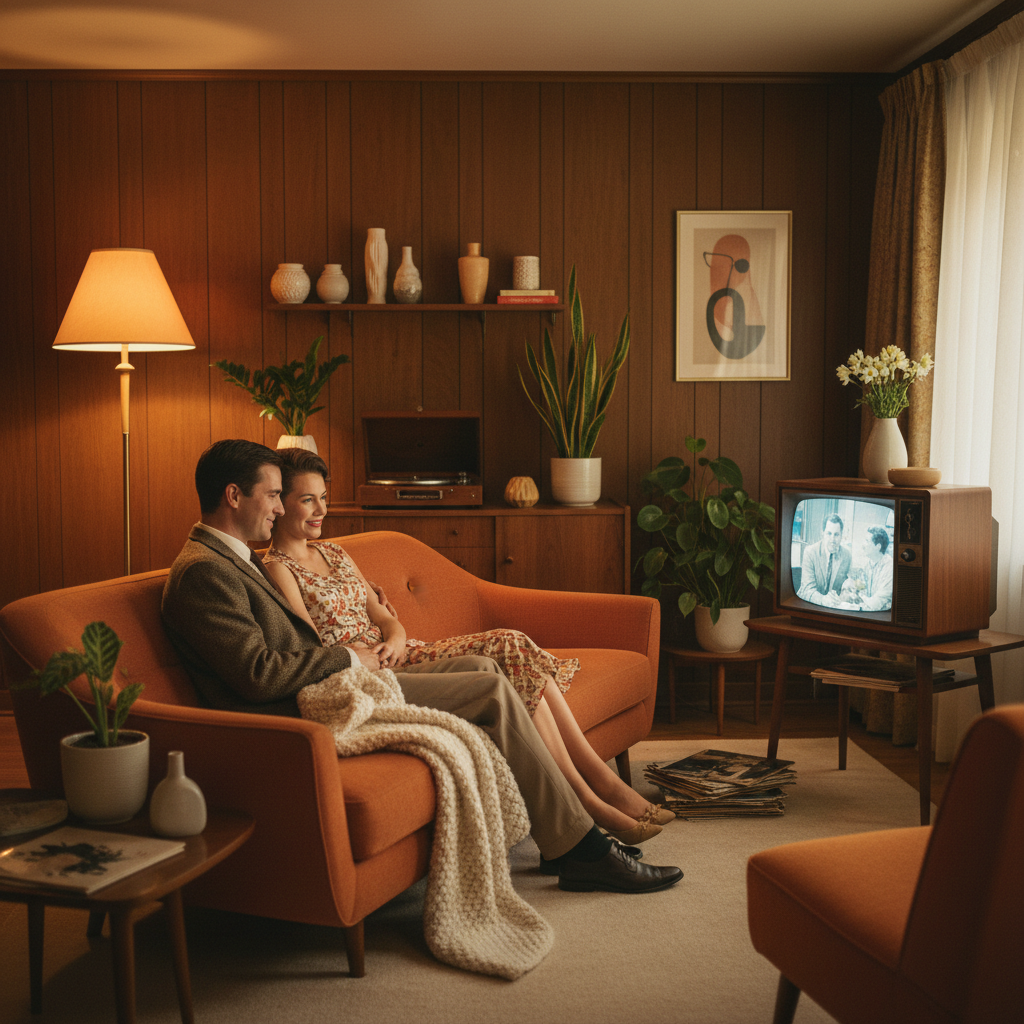
Every night at 5:30, my father came through the front door and hung his jacket on the same hook he had used since 1961.
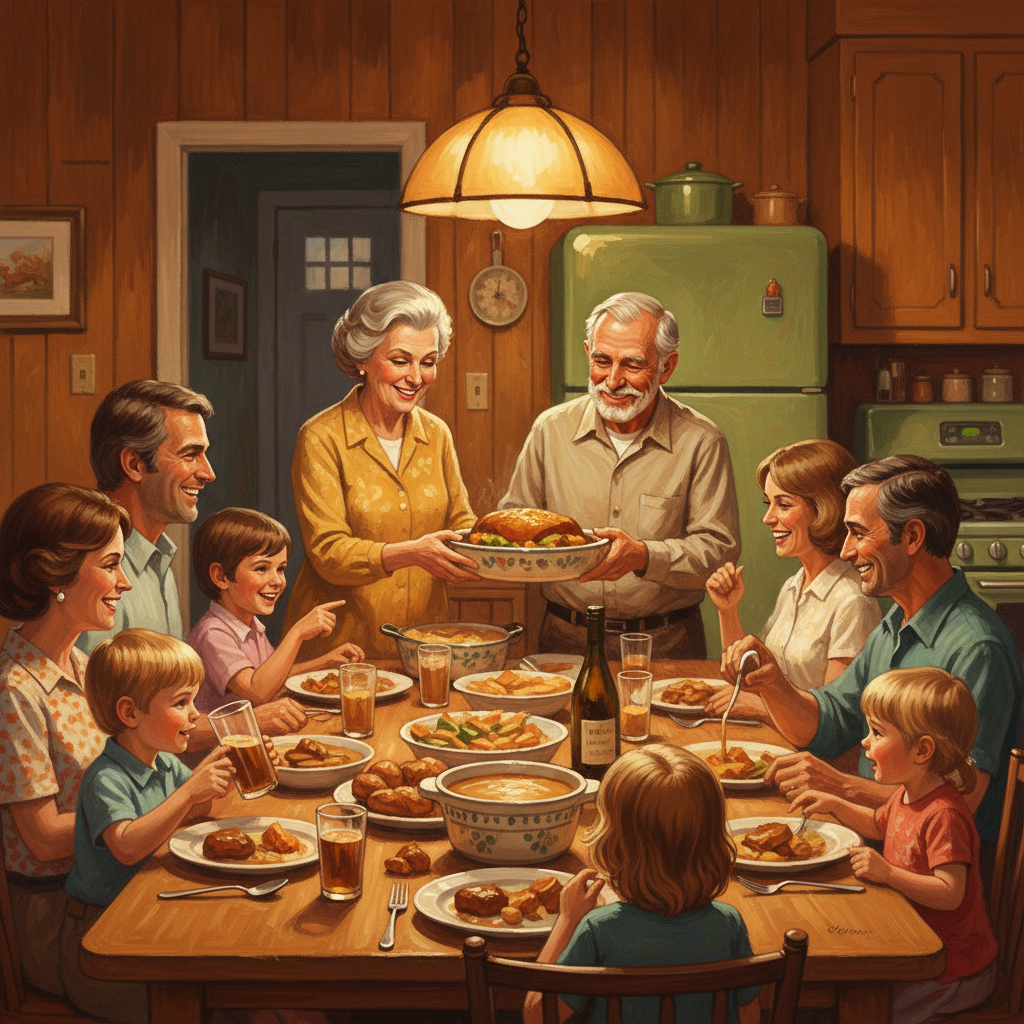
Dinner was at 6:00. Not 6:15. Not whenever we felt like it. Six o'clock, because that was when dinner was, in the same way that Sunday was church and Thursday was payday and the Fourth of July was fireworks and potato salad in the backyard.
I am 71 years old and I still set a timer in my head at 5:55, even though I live alone now and the only one waiting for dinner is me.
What the Table Was Actually For
We didn't call it connection. We called it supper.
But looking back through everything I've learned, 34 years as a high school librarian, reading every sociological study I could get my hands on, watching generations of teenagers grow up and try to figure out who they are, I can see clearly what that nightly ritual was doing for all of us.
Research from the National Center on Addiction and Substance Abuse at Columbia University found that teenagers who ate dinner with their families five or more nights per week were significantly less likely to use drugs, alcohol, or tobacco than those who dined with family two nights or fewer. They had better grades. Better relationships with their parents. A stronger sense of identity.
We didn't know any of that. We just knew Mom was going to ask about our day, and Dad was going to argue with the six o'clock news, and someone was going to spill their milk, and somehow by 7:00 we would all feel like a unit again.
That unit feeling, what social scientists call "family cohesion," turns out to be one of the most powerful protective factors known in human development. We got it every night with meatloaf and green beans.
The Rituals That Held Everything Together
I've been thinking lately about the specific, unremarkable rituals of those years. The things nobody photographed because they happened every single day.
Grace before meals, even the rushed, mumbled kind, created a moment of pause. A deliberate breath before the chaos. Research on mindfulness, which didn't exist as a concept in 1968, now tells us that brief intentional pauses before eating improve digestion, reduce stress cortisol, and increase the sense of gratitude. My grandmother called it giving thanks. The researchers call it pre-meal mindfulness.
The no-television rule at the table, which felt punitive when I was nine, meant we had to look at each other. We had to talk. My father would go around the table and ask each of us one thing that happened that day. One thing we were grateful for. One thing we were struggling with. He didn't call it a gratitude practice. He called it "checking in."
The act of someone cooking for you, really cooking, not reheating, not ordering, is according to food sociologist Psyche Williams-Forson, one of the most primary acts of love and care humans perform for one another. We ate that love every night without naming it. We knew it was there.
What We Lost and What We Still Carry
I want to be honest here: not every dinner table was warm. Some were silent and tense. Some were sites of conflict that a child couldn't understand. I am not wearing rose-colored glasses about the 1960s American family.
But even the imperfect tables were teaching something. How to sit with discomfort. How adults navigate disagreement. What it looks like to show up even on the hard days.
When my husband David died three years ago, the thing I missed most, after him, after his laugh, after the particular way he said my name, was dinner. Not the food. The ritual. The 6:00 anchor in the day. The person across the table.
I've rebuilt it, slowly. I host dinner every Sunday now for whoever will come, my daughter, her family, neighbors, the graduate student next door who is far from home and hungry in every sense. I set the table with the good dishes. I ask everyone one thing they're grateful for.
My father would recognize it immediately.
What Science Says About Eating Together Now
You don't have to have children to benefit from communal eating. Research from Oxford University found that the more often adults eat with others, the happier and more satisfied with life they report being. Shared meals are associated with greater feelings of social connection, higher self-reported wellbeing, and even better physical health outcomes.
Community dinners, neighborhood potlucks, faith-based fellowship meals. These aren't just pleasant social activities. They are, according to evolutionary anthropologists, one of the oldest and most reliable ways human beings signal safety and trust to one another.
We built that signal into our daily lives without anyone telling us to. Six o'clock, every night, for years.
Come to the Table
If there is something I could give every person who feels lonely, and loneliness is a genuine public health crisis right now, with the Surgeon General calling it as damaging as smoking fifteen cigarettes a day, it would be this:
Find a table. Set it properly. Invite someone to it. Feed them something real.
You don't need my mother's pot roast recipe, though I'll share it if you want it. You need the ritual. The pause. The face across from yours in the lamplight.
My father knew something we've spent decades trying to rediscover. Connection doesn't require an algorithm. It requires a chair, a plate, and someone willing to show up at 6:00.