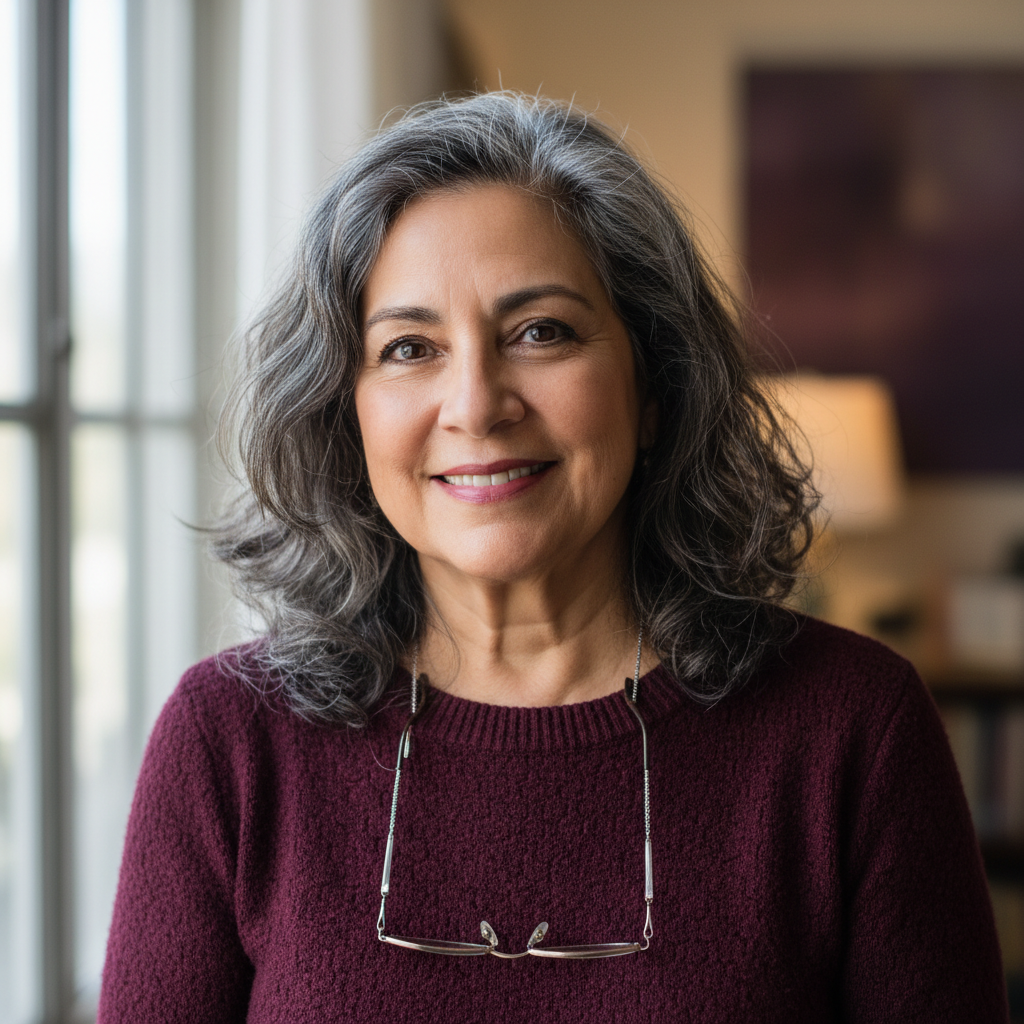
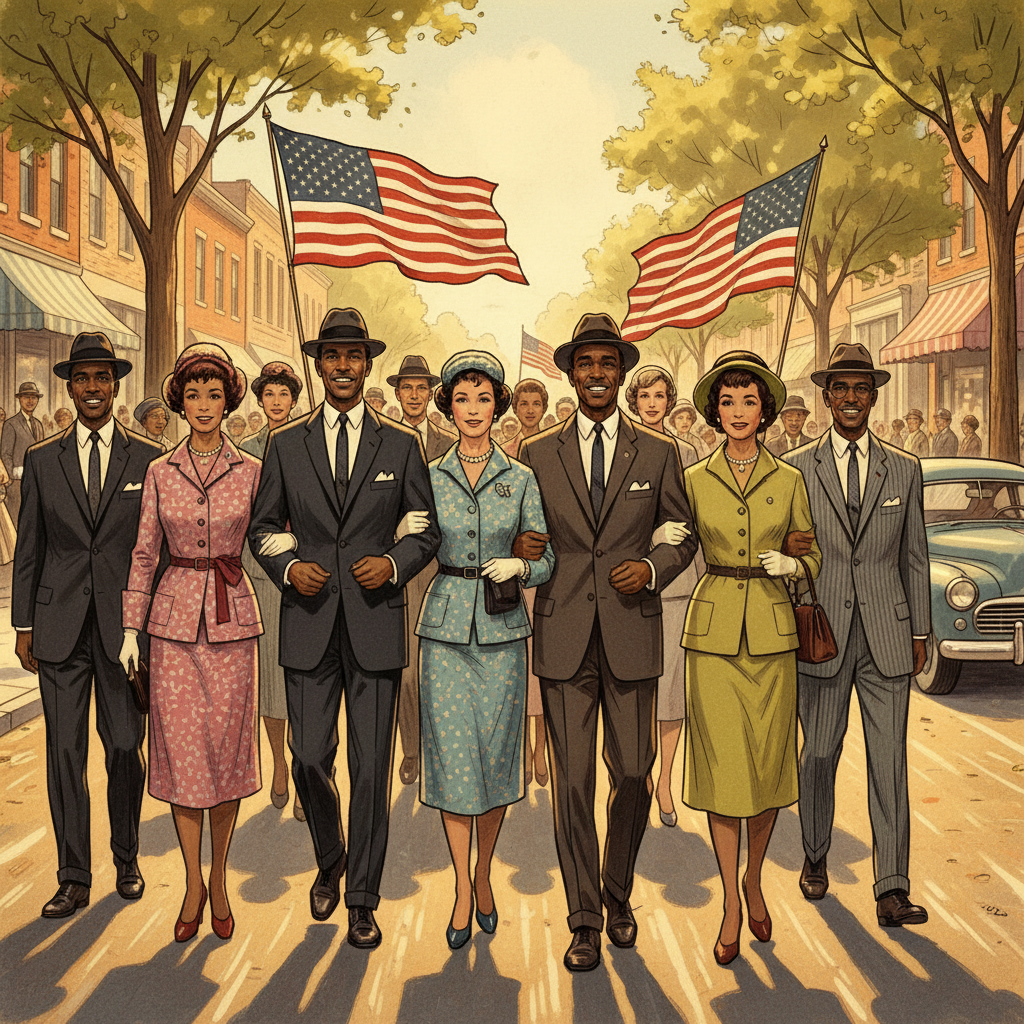
My mother marched in Birmingham in 1963. She was twenty-six years old, and she did not tell my father until afterward, because she knew he would have tried to stop her.
She said she wasn't brave. She said she was simply done.
I was three years old in 1963. I do not remember Birmingham. But I grew up in the house of a woman who had been done with something and decided to walk anyway, and that shaped everything about how I understood the world.
What Was Actually Happening
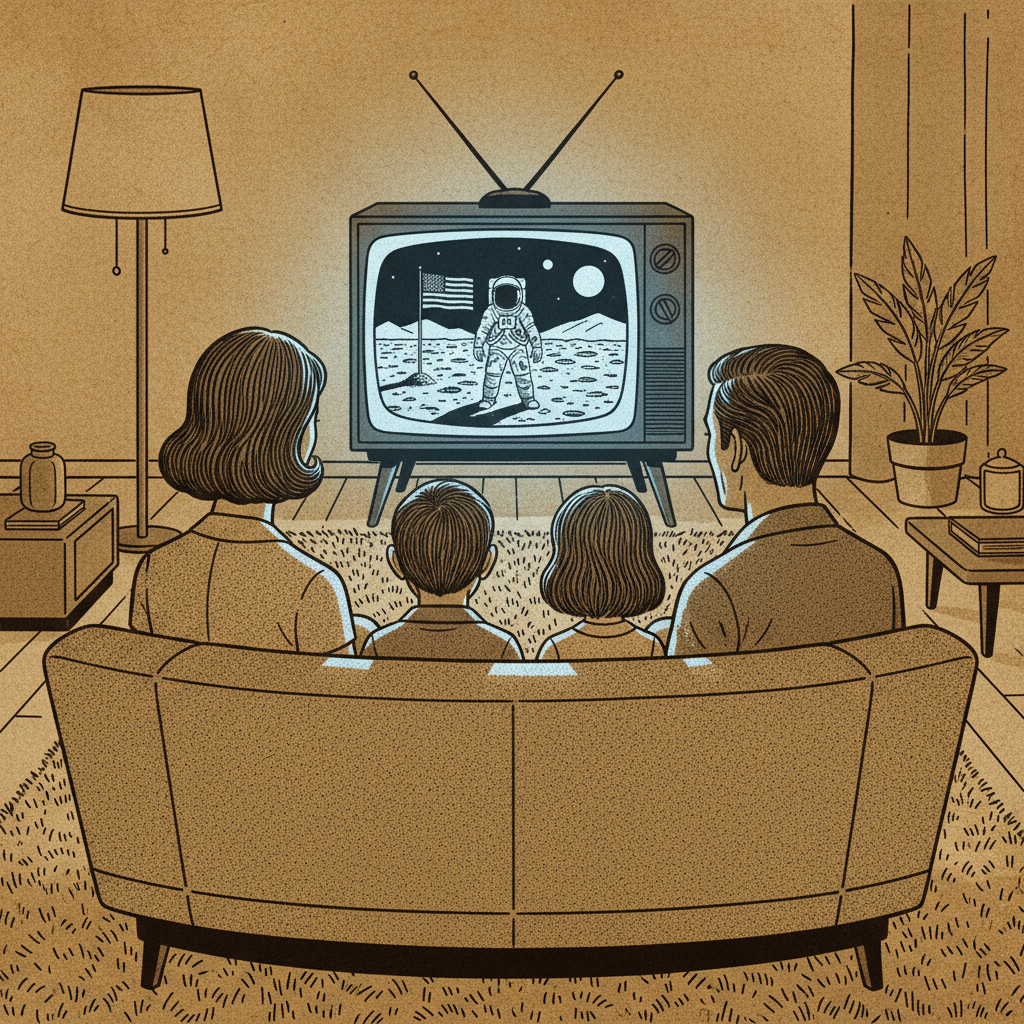
For baby boomers who were white and living outside the South, the Civil Rights Movement often arrived through the television, in fragments of footage that seemed almost incomprehensible. Police dogs. Fire hoses turned on children. The face of Bull Connor, the Birmingham Commissioner of Public Safety who ordered those hoses turned on, red and certain of himself on the evening news.
For Black Americans of the same generation, the movement was not television. It was life.
Martin Luther King Jr. was 26 years old when he led the Montgomery Bus Boycott in 1955, the same age as my mother when she marched in Birmingham. He was 34 when he delivered the "I Have a Dream" speech at the March on Washington in August 1963, standing before 250,000 people, improvising the most famous section of that speech from a place deeper than notes.
John Lewis, who would go on to serve in Congress for thirty-three years, was just 23 years old when he was beaten on the Edmund Pettus Bridge on Bloody Sunday in Selma, Alabama, in March 1965. He was struck in the head with a nightstick by a state trooper. He thought he was going to die. He crossed the bridge anyway.
These were not old men making grand historic gestures. They were young people, barely older than children, deciding that the alternative to action was something they could not live with.
The Laws That Changed Everything
The Civil Rights Act of 1964, signed by President Lyndon Johnson on July 2, 1964, prohibited discrimination based on race, color, religion, sex, or national origin. It was the most sweeping civil rights legislation since Reconstruction.
The Voting Rights Act of 1965 followed, prohibiting discriminatory voting practices. In the three months after it passed, nearly 250,000 Black Americans registered to vote for the first time.
Historian Taylor Branch, whose three-volume history of the King years is considered the essential account of the period, wrote that the movement forced Americans to confront the distance between the country's stated ideals and its actual practices. That confrontation was uncomfortable. It was also necessary.
The Women Who Don't Get Enough Credit
Rosa Parks is the name everyone knows, and rightly so. Her refusal to give up her seat on a Montgomery bus on December 1, 1955 was not a spontaneous act of individual exhaustion, as the myth sometimes suggests. Parks was a trained activist, a secretary for the NAACP, someone who had spent years understanding exactly how the machinery of injustice worked and how to confront it.
But there were thousands of women whose names are less celebrated. Fannie Lou Hamer was a Mississippi sharecropper who tried to register to vote in 1962 and was beaten in jail. She later gave a speech at the 1964 Democratic National Convention so powerful that President Johnson called an emergency press conference to pull the television cameras away from it.
Diane Nash, the Fisk University student who helped organize the Nashville sit-ins and co-founded the Student Nonviolent Coordinating Committee. Septima Poinsette Clark, called the "Mother of the Movement," ran the citizenship schools that taught thousands of Black Southerners to read and write so they could pass voter literacy tests.
These women did not make the evening news as often. They did the work.
What My Mother Taught Me
I asked my mother once, late in her life, what she remembered most about that march in Birmingham. She thought for a long time.
She said she remembered the singing. She said that when people were afraid, they sang, and the singing made the fear manageable. Not gone, but manageable. She said "We Shall Overcome" was not just a song. It was a statement of intention made in the presence of people who wanted to hurt you. It was a way of saying: you have not broken us yet.
She died at 84, still fierce, still clear about what she believed and why. She had voted in every election since 1960. She never missed one.
I have not missed one either.
What It Means Now
The generation of baby boomers came of age watching the Civil Rights Movement happen in real time, and it permanently altered what we believed was possible. We watched ordinary people, teachers, maids, students, sharecroppers, ministers, face violence and keep going. We watched the law change because enough people decided it had to.
Historian David Garrow, who won the Pulitzer Prize for his biography of Martin Luther King Jr., has argued that the movement's greatest lesson was not about any single leader but about the power of organized, sustained, nonviolent pressure applied over time.
That lesson does not expire. It belongs to every generation that inherits it.
My mother marched because she was done. I carry that with me every day. It is the most important inheritance I have.