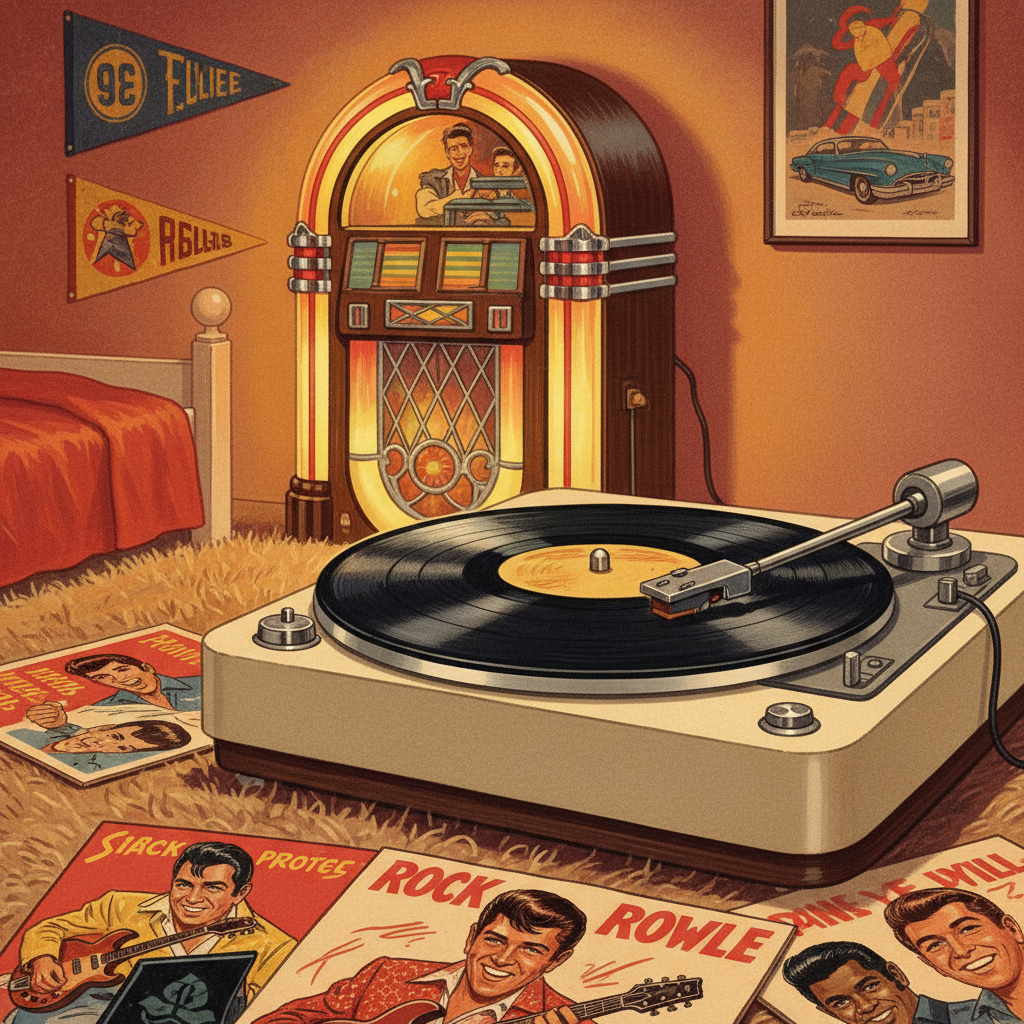
The first time I heard Elvis Presley on the radio, I was eight years old and in the back seat of my parents' Buick.
My mother reached over and turned the dial. My father looked straight ahead. Neither of them said anything.
I stored that sound somewhere in my body and did not let it go.
That is the story of rock and roll for an entire generation of baby boomers. It arrived through the radio and the television and the record player like a frequency that the adults couldn't quite receive, and we received it completely.
Before the Beatles, There Was the Blues
Rock and roll did not emerge from nowhere. It came directly from African American musical traditions: the blues of the Mississippi Delta, the rhythm and blues of postwar urban America, the gospel music of Black churches.
Chuck Berry wrote the blueprint for rock guitar in the early 1950s. Little Richard invented the theatrical energy that every frontman since has borrowed from. Fats Domino put boogie-woogie piano into the mainstream. Bo Diddley created a rhythm pattern so distinctive it has its own name.
Music historian Peter Guralnick, whose two-volume biography of Elvis is the definitive account, writes that what Elvis did was not steal from Black artists. The complicated history of who got paid and credited is real, but Guralnick's argument is that Elvis synthesized Southern musical traditions in a way that made them legible and irresistible to white teenage America. The result was an explosion.
February 9, 1964
If there is one date that captures what music meant to baby boomers, it might be February 9, 1964. That was the night The Beatles appeared on The Ed Sullivan Show.
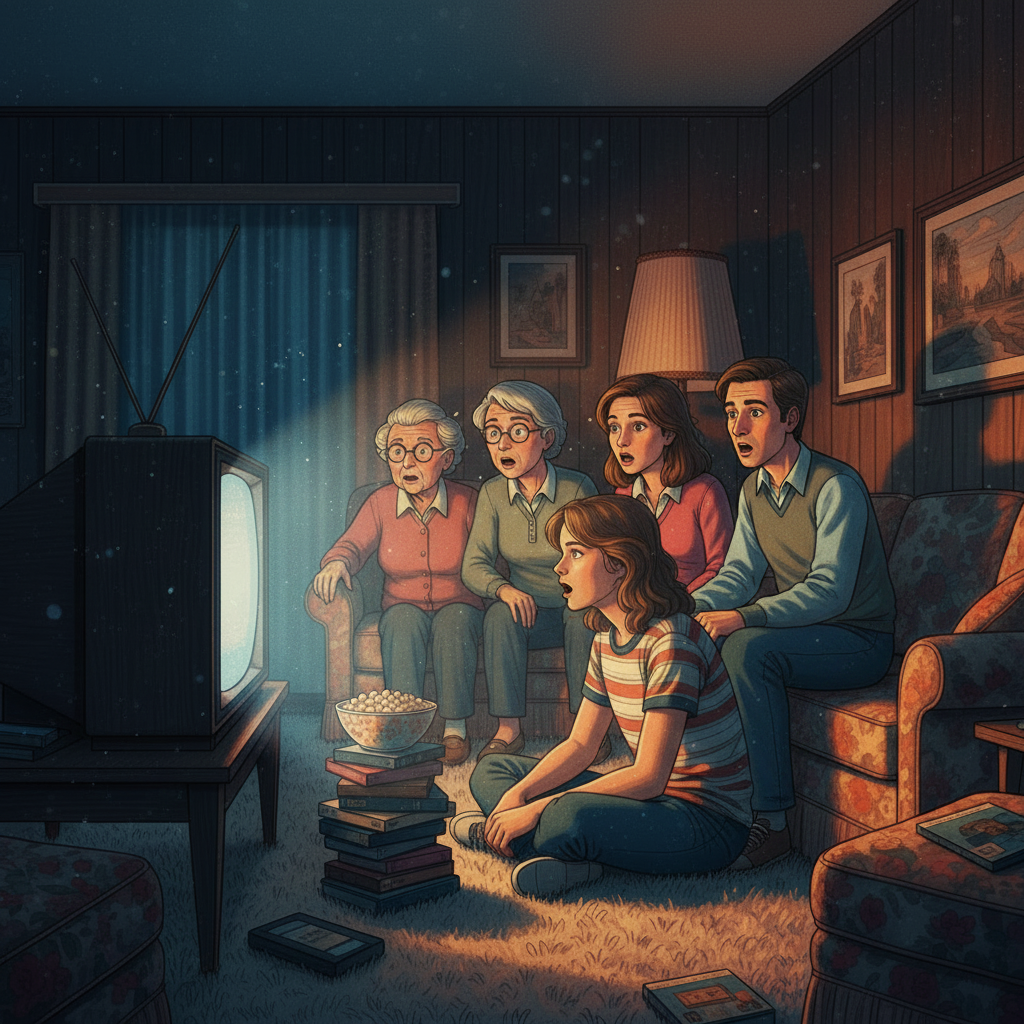
Seventeen-year-old me was in my friend Donna's living room with eight other girls. We had been talking about The Beatles for weeks, ever since their plane landed at Kennedy Airport and a crowd of screaming teenagers nearly stopped traffic.
When they came on, John Lennon, Paul McCartney, George Harrison, and Ringo Starr, Donna started crying. I didn't understand it at the time. I understand it completely now.
It was joy. Pure, physical, overwhelming joy. The kind that doesn't have a logical explanation and doesn't need one.
73 million Americans watched that broadcast. At the time, it was the largest television audience in American history.
The Music That Held the Decade Together
What is remarkable, looking back, is how closely the music tracked the history. As the decade grew darker and more complicated, so did the songs.
Bob Dylan gave us the protest songs, "Blowin' in the Wind" and "The Times They Are A-Changin'," that became the anthems of the Civil Rights Movement and the anti-war movement. Motown gave us Marvin Gaye, Stevie Wonder, Diana Ross, and a sound so joyful and precise it felt like the best possible argument for integration.
Jimi Hendrix played the guitar as though it were a new instrument that had been waiting for him specifically. Janis Joplin sang with a raw emotional honesty that felt dangerous and necessary.
Simon and Garfunkel wrote "The Sound of Silence" in 1964, a song about loneliness and disconnection in a society of noise that feels, if anything, more relevant now than it did then.
Woodstock
In August 1969, six weeks after the moon landing, half a million people gathered on Max Yasgur's farm in upstate New York for three days of music. Woodstock was not well organized. It rained. The food ran out. The roads were so clogged that performers had to arrive by helicopter.
It was also, by almost every account, something extraordinary. A spontaneous temporary city of young people who managed, despite everything, to take care of one another.
Sociologist Todd Gitlin, who wrote extensively about the 1960s counterculture, argues that Woodstock was the high-water mark of a particular kind of collective optimism. It was the belief that shared music and shared values could constitute a form of community powerful enough to change the world.
The world did not change as much as we hoped. It changed more than the cynics predicted.
What the Music Left Behind
I am 73 now. I still own vinyl records. I still know every word to songs I haven't heard in twenty years.
That is what music does. It does not live in your head. It lives in your body, in some layer of memory that doesn't fade the way other things fade. A few bars of a song and you are somewhere else entirely: seventeen, in Donna's living room, watching four boys from Liverpool change the world. Researchers at the National Institute on Aging have even found that music engages memory and emotion in ways that remain remarkably resilient as we age, which is a comfort, and no surprise at all to anyone who lived through the 1960s.
Our generation did not just consume that music. We were shaped by it, argued through it, grieved and celebrated through it. The rock and roll of the 1950s and 1960s is not nostalgia. It is the architecture of who we became.
Put on the record. You'll remember.