
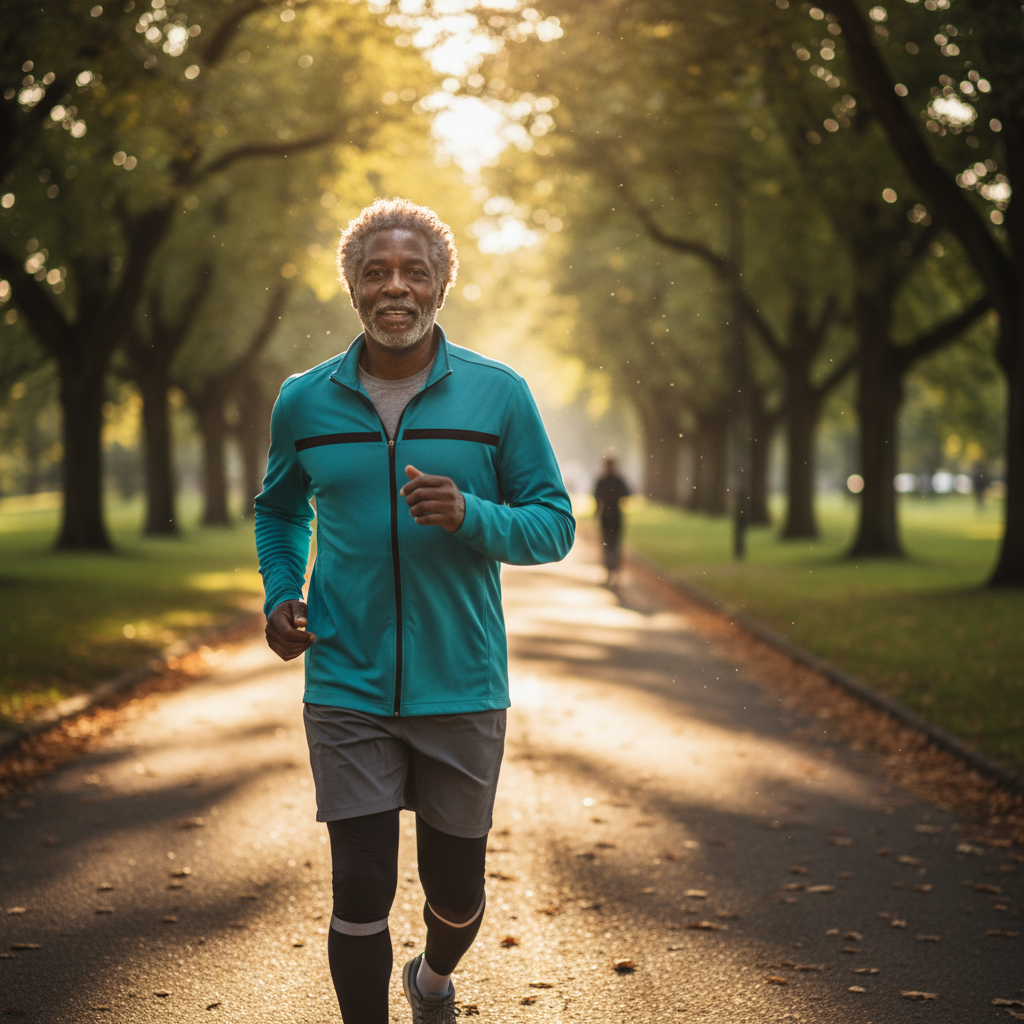
I'll be honest with you. When my doctor told me at my annual physical that I needed to "increase my daily movement," I smiled politely and drove straight to the Dairy Queen on Route 9.
I was 71 years old. I had bad knees. My idea of exercise was walking from the couch to the refrigerator and back. Exercise was for younger people, as far as I was concerned.
But a few weeks later, my daughter called with some news: her father-in-law, a man just two years older than me, had suffered a major stroke. He'd been sedentary for years. The doctors said it was a contributing factor.
That was my wake-up call.
Week One: Humble Beginnings
I started small. Twenty minutes. Every morning after breakfast, I put on my walking shoes, the New Balance ones I'd bought two years ago and never used, and I walked around the block.
The first three days were genuinely miserable. My knees ached. I was winded within five minutes. I came home sweating from what amounted to about a quarter mile. I felt ridiculous.
But I kept going.
Month Two: Something Shifted
Somewhere around week six, I noticed I wasn't dreading my morning walk anymore. In fact, I was looking forward to it. The neighborhood, which I'd driven through for thirty years, suddenly had details I'd never noticed. The old oak on Maple Street. The family of cardinals nesting in the hedges on the corner.
According to the American Heart Association, just 150 minutes of moderate activity per week, which works out to about 21 minutes a day, can reduce your risk of heart disease by up to 35%. I was barely hitting that number, and yet I could feel something changing.
My resting heart rate dropped from 82 to 71. I know because I bought a cheap fitness watch to track it.
Month Four: The Sleep Revolution
This was the surprise I didn't expect. I'd been a terrible sleeper for a decade. Lying awake at 2 a.m., mind racing about nothing and everything. My wife called it my "3 a.m. worry parade."
By month four, I was sleeping through the night. Not every night, but most nights. The National Institutes of Health reports that regular moderate exercise can increase deep sleep by up to 65%. I became a believer.
Month Six: The Numbers
At my six-month follow-up, my doctor looked at my chart, then looked at me, and said, "Whatever you're doing, keep doing it."
My blood pressure had dropped from 138/88 to 124/79. My A1C, a blood sugar marker my doctor had been watching with some concern, had nudged down a full point. I'd lost eleven pounds without changing a single thing about my diet.
But the number that meant the most to me? My knee pain was down by about 60%. Turns out, gentle movement lubricates the joints rather than wearing them down. The Arthritis Foundation has been saying this for years. I just wasn't listening.
And there's something else worth knowing. The National Institute on Aging notes that regular physical activity in older adults is linked to sharper memory and a lower risk of cognitive decline. I can't prove my memory improved, but I'll tell you this: I feel more like myself than I have in years.
What I Wish I'd Known Sooner
You don't need a gym. You don't need a trainer. You don't need expensive equipment. You need shoes, a sidewalk, and twenty minutes you probably think you don't have but absolutely do.
I'm 72 now. I walk 35 minutes most mornings. Some days I do 45. I still stop at Dairy Queen occasionally. But these days, I walk there.
---
**Medical Disclaimer:** This article is for informational and personal narrative purposes only and does not constitute medical advice. The experiences shared reflect the author's personal journey and should not be taken as a substitute for professional medical consultation, diagnosis, or treatment. Always consult a qualified healthcare provider before making any changes to your medications, supplements, diet, or health regimen. Results mentioned are individual experiences and may not be typical.