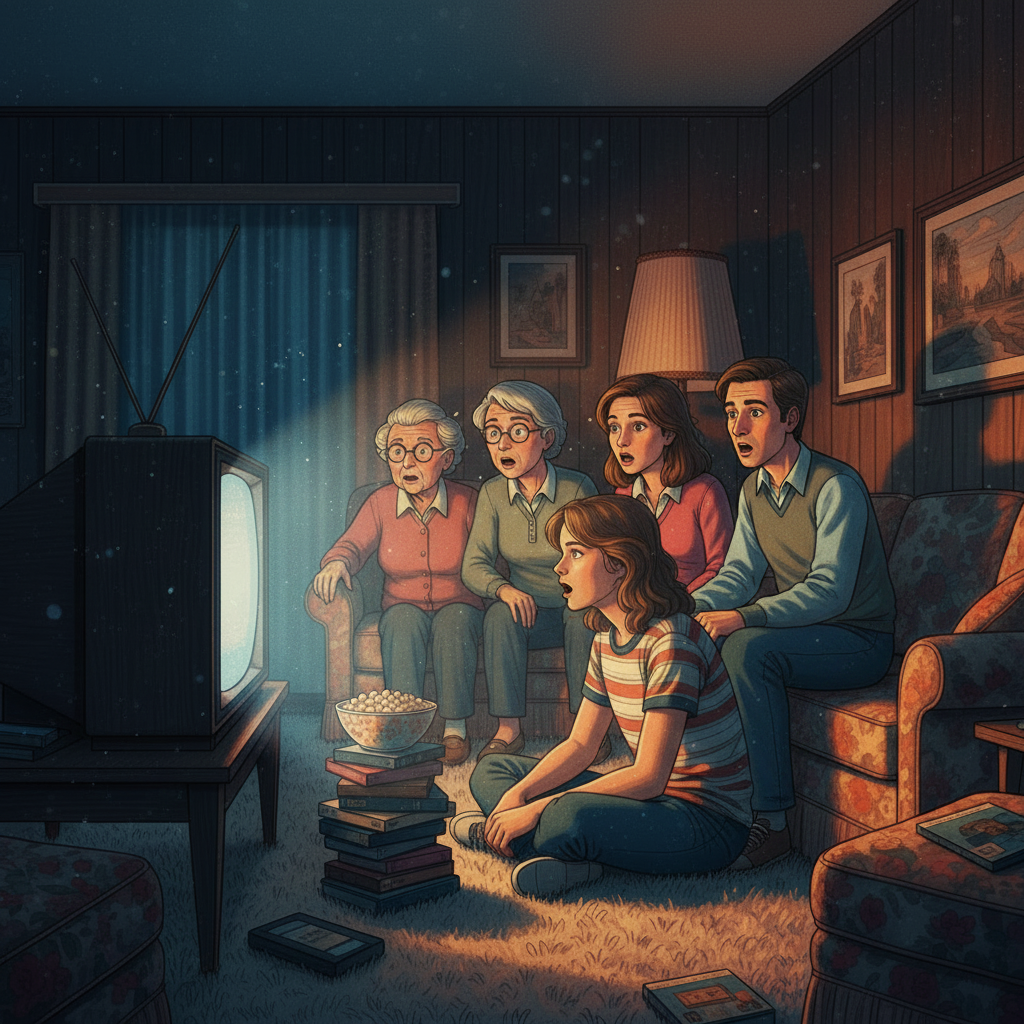
I was twelve years old the summer MTV launched, and I didn't have cable.
Neither did most of my friends. Cable television in 1981 was something you heard about the way you heard about vacation houses or foreign cars. A thing that existed for other people, people whose parents had made slightly different financial choices. We had four channels, rabbit ears wrapped in aluminum foil, and a UHF knob that picked up Spanish-language stations if the weather was right.
But Tommy Demarco down the street had cable. And on August 1, 1981, at exactly 12:01 in the morning, Tommy's living room became the most important room in the neighborhood.
The First Words Ever Spoken on MTV
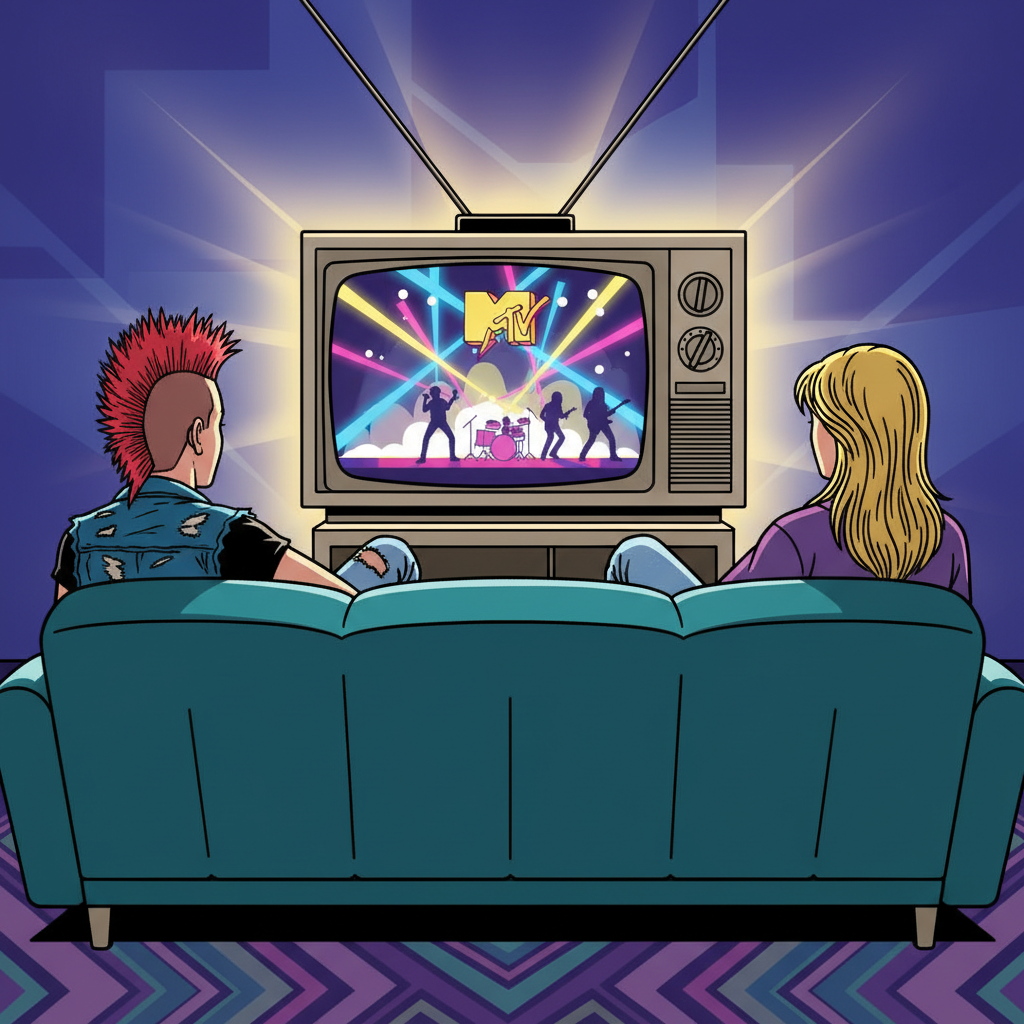
The first thing that aired on the newly launched Music Television network was a clip of the Space Shuttle Columbia launch, repurposed as the network's ident. Then a video: "Video Killed the Radio Star" by The Buggles. Then a voice-over that said, simply: "Ladies and gentlemen, rock and roll."
It was not a slogan anyone had workshopped to death. It was not focus-grouped. It was five words that turned out to be exactly correct.
The Rolling Stone oral history of MTV's launch is full of chaos and improvisation. A network built on a shoestring, run by people barely older than the audience they were courting, who mostly made it up as they went along. The original VJs, Martha Quinn, Alan Hunter, Mark Goodman, J.J. Jackson, and Nina Blackwood, were not polished television personalities. They were just people who seemed genuinely excited about music. That was the whole trick.
What "Video Killed the Radio Star" Actually Meant
The choice of that first video was not an accident, even if everything else about the launch felt improvised.
The Buggles were a British art-pop duo, and their song, released in 1979, was a lament about technology displacing intimacy. About a new medium making the old one obsolete. The irony was deliberate and completely on the nose: MTV was literally using a song about the death of radio to announce its own birth on television. If you were twelve, it just sounded cool. If you were paying closer attention, it was a little unsettling.
Both of those things were right.
Why It Mattered So Much, So Fast
By 1983, MTV had fundamentally restructured the American music industry. Labels that had ignored the network at launch were now scrambling to produce videos. Artists who were talented but visually arresting, Duran Duran, Culture Club, Madonna, Michael Jackson, became international superstars in a way that radio alone had never been able to manufacture.
Michael Jackson's Thriller video, released in December 1983, was fourteen minutes long. Fourteen minutes. It had a spoken introduction from Vincent Price and a full horror-film narrative arc. It cost half a million dollars to make and it was treated as a cultural event before it even aired. MTV premiered it with a "World Premiere" countdown. People gathered to watch the way their parents had gathered to watch moon landings.
For the record: that is not an exaggeration. It felt exactly like that.
The Race Problem Nobody Wanted to Talk About
For all its cultural power, early MTV had a serious and well-documented problem: it barely played Black artists.
The network's early playlist was overwhelmingly white rock and new wave. When Columbia Records' president Walter Yetnikoff threatened to pull all CBS artists from the network unless they added Michael Jackson's "Billie Jean" to rotation, the network relented. The NPR retrospective on MTV's 40th anniversary goes deep on this, covering the racial gatekeeping, the eventual course correction, and what it cost the artists who were shut out during those early years.
Rick James said it plainly at the time. Prince said it with his entire discography. MTV eventually evolved. But it didn't start right, and the generation that grew up on it is old enough now to say so clearly.
The VJs Were Us
What made MTV feel different from anything that had come before was the VJs. These were not professional television anchors with teleprompters and anchor desks. They sat on sofas, stumbled over their words, laughed at themselves. Martha Quinn, just 21 years old at launch, looked like someone you might have had a locker next to in high school.
That was intentional and it was revolutionary. Television had always looked down at its audience from a slight height. MTV pulled up a chair.
For a generation that had been told repeatedly, in ways subtle and direct, that it was the spoiled, lazy, entitled generation after the Boomers, that small act of being treated like a peer mattered more than we knew how to articulate at the time.
What We Carry From It Now
I have not had cable television in eleven years. I watch things on my phone, on streaming services, on a laptop propped on a pillow. My twelve-year-old self would be completely baffled by all of it and would immediately understand exactly what it was. Another new machine for delivering the thing that actually matters, which is music and the feeling of being young and awake to the world.
MTV stopped playing music videos in 2011. The channel is still on the air, showing reality television, which feels like the longest possible punchline to that first broadcast. Video killed the radio star. Reality killed the video star.
But for a decade, maybe a little more, something happened in that network that doesn't happen very often in American culture. A medium was invented that matched exactly the audience that needed it, at exactly the moment they needed it. We were young and loud and restless and starving for something that felt like ours. MTV handed it to us at midnight on a Saturday, with five words.
Ladies and gentlemen, rock and roll.
We never got over it. I hope we never do.