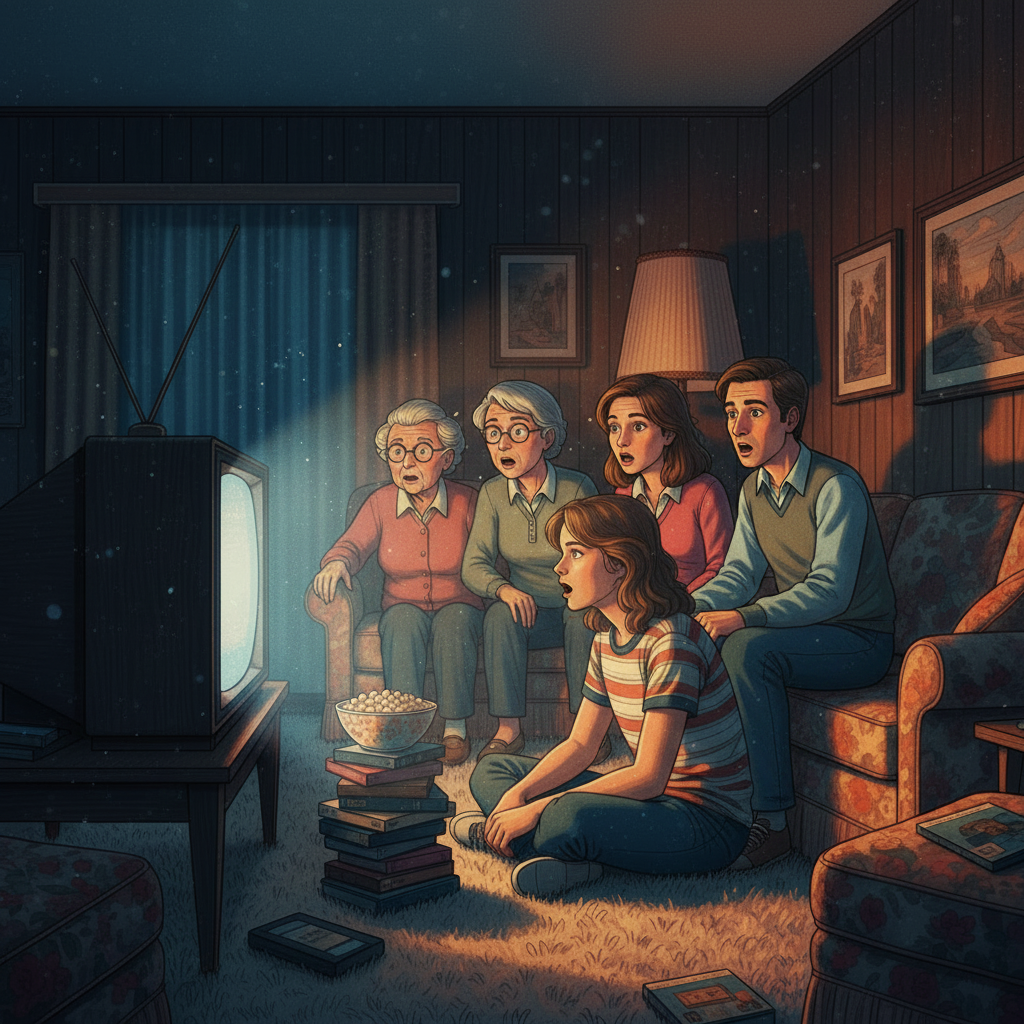
I was eleven years old, and my older brother had basically barricaded himself in front of the television.
This was a big deal. In our house in Cleveland, the TV belonged to whoever sat down first, and my brother had been sitting there since before dinner, waiting. I didn't fully understand what we were waiting for. He just kept saying, "You'll see." He had that look teenagers get when they know something you don't, and they're actually excited to share it for once.
Then it started. That rolling fog. The grainy old horror movie setup. Vincent Price's voice dropping in like a thundercloud. And then Michael Jackson, a man I already knew from the radio, from the posters at the mall, from my mother humming "Rock With You" while she made dinner, transformed into something I had never seen a pop star do before. He became a monster. He danced with zombies. He grinned at the camera with yellow cat eyes.
I grabbed my brother's arm and didn't let go for fourteen minutes.
It Wasn't Just a Music Video
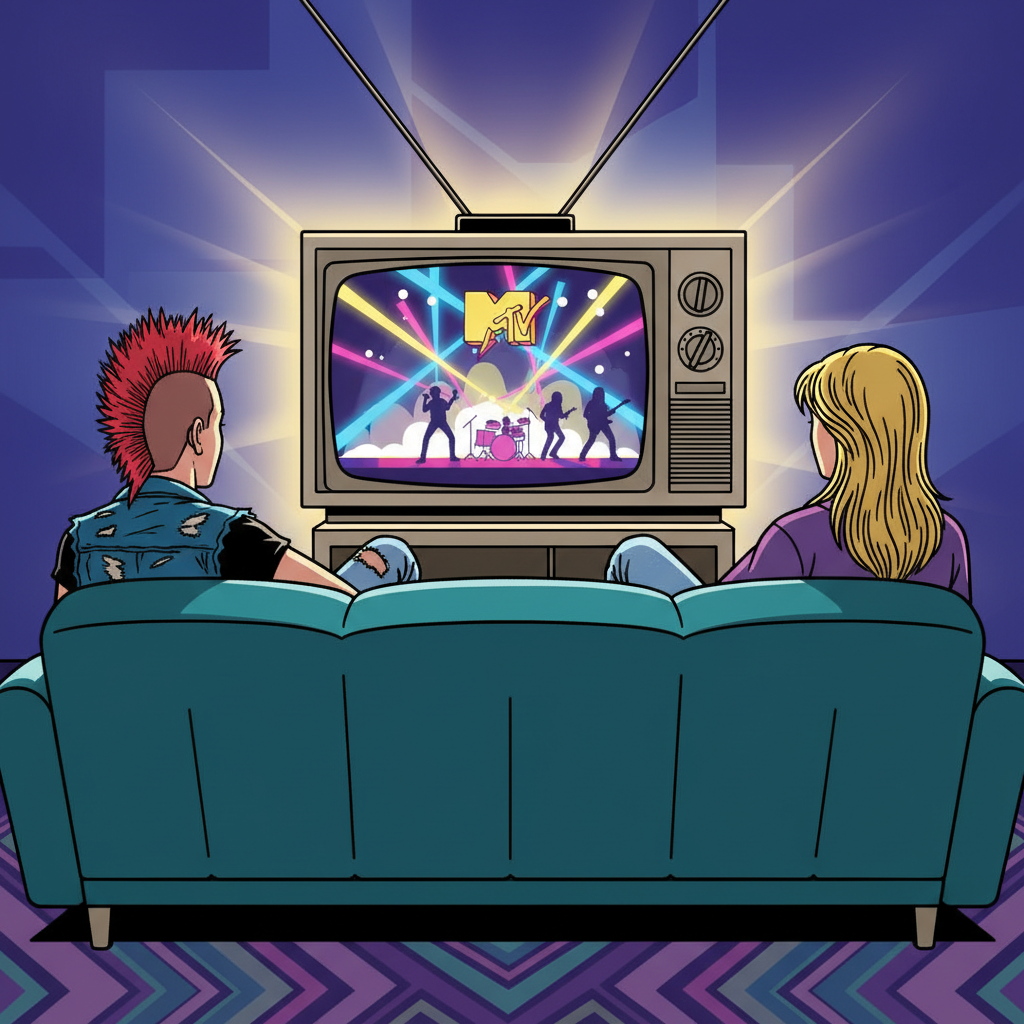
Here's what's easy to forget now, forty-plus years later: in 1983, music videos weren't really a thing yet. MTV had only launched two years earlier, and most of what played on that channel was a band standing in a field looking slightly confused about why they were standing in a field. The visual language of music didn't exist the way it does today. You heard a song. Sometimes you saw the album cover. That was it.
Thriller didn't just raise the bar. It built an entirely different bar in a completely different building.
John Landis directed it, the same man who'd just made An American Werewolf in London. Rick Baker, who won Academy Awards for his creature effects, did the makeup. They shot it like a real film, because it was a real film. A short film with a budget of half a million dollars, which was completely unheard of for a music video at the time. The whole thing ran fourteen minutes, including a spoken introduction from Vincent Price and a proper narrative arc. A beginning. A middle. An end. A twist.
For kids growing up in that era, it was the first time a piece of music felt like an event you had to witness, not just hear.
The Morning After
I went to school the next day and every single person in my class had watched it. Every one of them. In 1983, that kind of shared cultural moment was the only kind that existed, because there was no algorithm sorting you into your own personal feed. There was just the TV, and what was on the TV, and the conversation about it at your lunch table Monday morning.
We tried to recreate the zombie dance on the blacktop at recess. We failed badly, and completely without self-consciousness, because we were eleven and we didn't care. My friend Tamara convinced her mom to buy her a red leather jacket from Sears. Three boys in my class tried to grow their hair out so they could get the curl. Nobody talked about anything else for two weeks.
But here's the thing I didn't understand until much later: what Michael Jackson did with Thriller) wasn't just entertainment. It was a demonstration of possibility. He showed an entire generation that a Black artist could dominate every lane at once, pop radio, R&B charts, MTV, cinema, fashion, cultural conversation, and not have to apologize or minimize himself to do it. In 1983, MTV was playing very few Black artists. Jackson essentially forced the channel's hand, and by doing so, cracked a door that changed the whole landscape of who gets to be a mainstream pop icon in America.
What It Actually Built
Every music video made in the decade that followed owes something to Thriller. The idea that a video could tell a story, could have costumes and choreography and a cinematic narrative, that it could be a cultural artifact worth discussing on its own terms separate from the song, all of that traces back to that night in 1983.
Madonna's "Like a Prayer." Prince's) "When Doves Cry." Guns N' Roses' "November Rain." Even decades later, Beyonce's "Lemonade" as a visual album, that DNA runs through Thriller first. The idea that a performer could control their visual identity with the same seriousness as their sound? Jackson invented that language for modern pop music.
The album itself broke records that still haven't been matched. It won eight Grammy Awards. It sold over 70 million copies worldwide. It became, for a long stretch, the best-selling album in recorded history. But the records almost feel beside the point. What Thriller did was make pop music feel important, feel cinematic, feel worth taking seriously as art.
For those of us who were kids in those years, it was the first time pop culture felt genuinely dangerous and genuinely beautiful at the same time. Like it could scare you and move you in the same breath.
The Part That Stayed
My brother and I don't talk much anymore. Life does that. He's in Phoenix, I'm still in Ohio, and we mostly text on birthdays. But a few years back I was at a Halloween party, and someone put on Thriller through the speakers, and across the room I watched a woman my age, late forties, someone I'd never met, stop mid-conversation and get this particular look on her face. That look of being pulled backward through time. Her lips moved a little with Vincent Price's spoken word section. Her shoulders dropped a half inch.
I know that look. I've worn it myself.
That's what Thriller actually left behind. Not the records, not the awards, not the cultural essays or the Wikipedia entries. It left a moment permanently embedded in a generation's memory. The night the TV was on, the fog rolled in, and something changed.
We still carry it around with us, forty years later, every time those opening synths start up.
My brother called me last Halloween. Just to say he'd been thinking about that night in the living room. I told him I had too.
Some things you don't forget. You just wait for the right song to remind you.