Sponsored — We only share products we have genuinely researched and believe may help our community. See our full affiliate disclosure here.
It started as a faint hum. I remember dismissing it the first few times. Just a long day, I told myself. Just stress. But then I noticed it was there in the quiet of the morning, before I even got out of bed. A thin, persistent ringing in my left ear, like someone had left a television on in a room far away.
I was 63. My audiologist told me what I half-expected to hear: some age-related hearing changes, likely the beginning of tinnitus, very common, not much to be done. I nodded, thanked her, drove home, and sat in my kitchen trying to remember the last time I had heard complete silence.
I couldn't.
What followed was two years of white noise machines, ear plugs at odd hours, and a low-grade anxiety that made me dread quiet places. Restaurants were fine. Libraries were hard. Bedtime was the worst. And every doctor I saw said essentially the same thing: learn to live with it.
I wasn't ready to accept that. So I started reading everything I could find.
What Tinnitus Actually Is (And Why It Happens)
Here's the part that surprised me most. Tinnitus isn't really an ear problem. Not entirely. It's a brain problem.
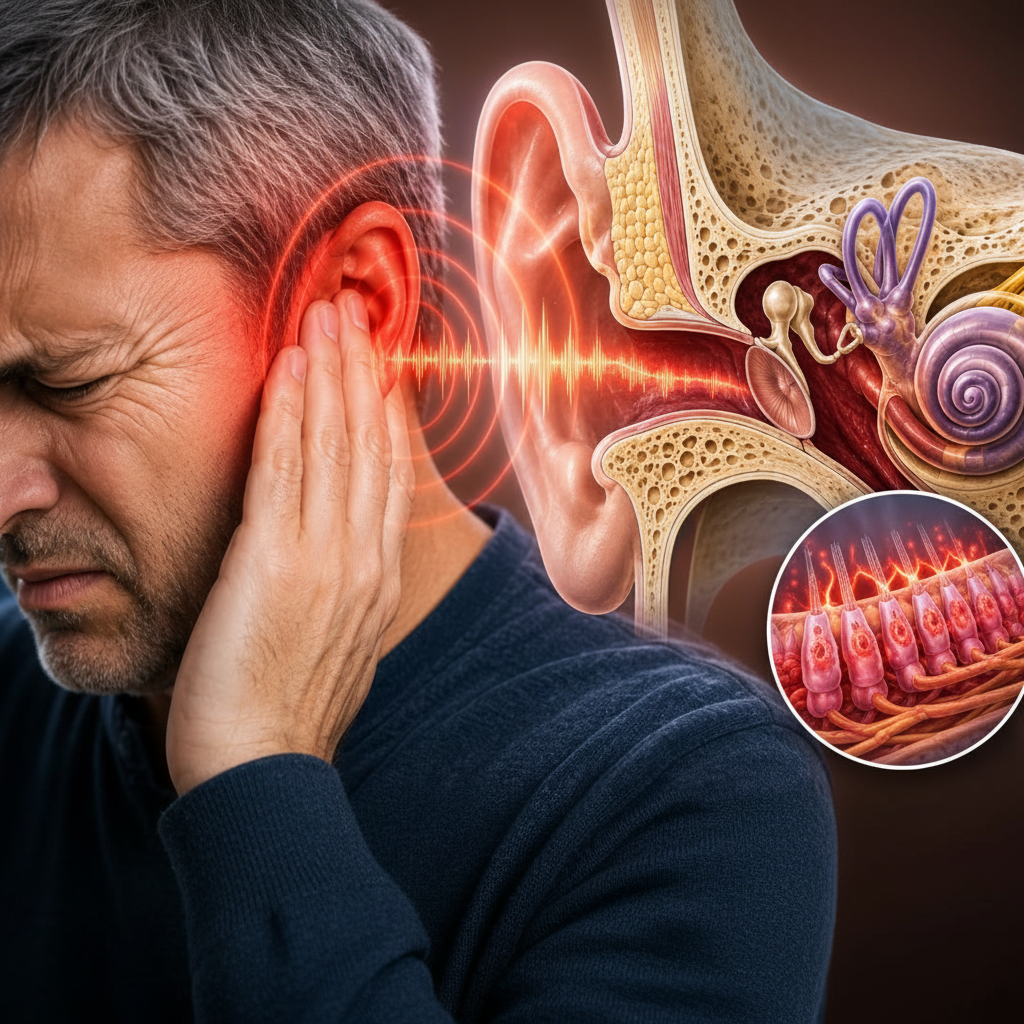
Deep inside your inner ear are tens of thousands of microscopic hair cells called stereocilia). These tiny structures convert sound vibrations into electrical signals that your auditory nerve carries to your brain. When those hair cells become damaged or inflamed, they can begin firing erratically, sending phantom signals to the brain. Your brain, trying to make sense of the noise, interprets those misfiring signals as sound. Ringing. Buzzing. Hissing. Clicking.
According to the American Tinnitus Association, over 50 million Americans experience some form of tinnitus, and roughly 20 million struggle with it chronically. For seniors over 65, the prevalence climbs even higher, with hearing specialists linking it to a combination of age-related cellular stress, reduced blood flow to the inner ear, and cumulative exposure to noise over a lifetime.
The National Institute on Deafness and Other Communication Disorders confirms that while there is no single approved cure, research strongly supports the role of inflammation management and nerve-cell support in reducing the severity and frequency of tinnitus symptoms. That's the thread I started pulling.
Why the Inner Ear Becomes Vulnerable With Age
As we get older, several things work against us. Blood flow to the cochlea, the snail-shaped structure at the heart of your inner ear, gradually decreases. The protective lining that keeps hair cells nourished and shielded from oxidative stress starts to wear thin. And the body's natural anti-inflammatory responses slow down, leaving those fragile cells increasingly exposed.
Research published through the NIH has found that antioxidant deficiency and chronic low-grade inflammation in the auditory pathway are two of the most significant contributors to age-related tinnitus and hearing decline. This is important because it shifts the conversation from "nothing can be done" to "here's what might actually help."
That reframing changed everything for me.
What I Found When I Started Researching Natural Support
After months of reading clinical studies, I kept finding the same handful of plant-based compounds showing up again and again in the research on auditory nerve health and inner ear inflammation. Things like Maca Root, Ashwagandha, Mucuna Pruriens, and Pacific Kelp, compounds that support neurological function, reduce oxidative stress, and help maintain healthy circulation to peripheral tissues including the inner ear.
That's when I came across Quietum Plus. What set it apart from the noise of generic "hearing supplements" was its focus on the neurological side of tinnitus, not just the ear canal. The formula targets the nerve-cell communication pathway between the ear and the brain, supporting the very mechanism that misfires in tinnitus sufferers.
The ingredient list reads like the summary of the research I'd spent months compiling. Mucuna Pruriens for dopamine pathway support. Maca Root for hormonal balance and cellular resilience. Ashwagandha for its well-documented neuroprotective properties. Catuaba Powder and Damiana, traditionally used to support nervous system health. L-Tyrosine and L-Arginine for neurotransmitter support and circulation.
It's a formula built around the science of what actually goes wrong inside the auditory system, not just a generic antioxidant blend with an ear on the label.
What I actually noticed: I didn't expect much at first, honestly. I'd been disappointed before. But around week three, I realized I had slept through the night twice without waking to adjust the white noise machine. By week six, the ringing was still there some days, but it had lost that sharp, intrusive quality. Quieter. More like a distant memory of a sound than an active presence. My wife noticed I'd stopped grimacing during breakfast when the kitchen was quiet.
Results like mine aren't guaranteed, and I want to be clear about that. But for the first time in two years, I felt like I was doing something rather than just enduring.
How You Can Help Keep Our Magazine Free
At The Common Thread Life, every story stays 100% free for all, forever. No paywalls, no subscription fees. We sustain our editorial independence through carefully chosen partnerships with products our team has genuinely researched. Quietum Plus is one of them.
Option 1 — The Amazon Option: Quietum Plus is available on Amazon with the convenience, fast shipping, and return policy you already trust. Please know: we receive no commission if you purchase through Amazon — your support comes through Option 2.
Option 2 — The Support Option: Visit the official Quietum Plus website through our exclusive magazine link. If you purchase through our link, we receive a small commission at no extra cost to you. This is how we keep The Common Thread Life free and independent.
The choice is entirely yours. We are simply grateful you are here.
This article is for informational purposes only and does not constitute medical advice. Tinnitus can have many causes, some of which require medical attention. Please consult your physician or a qualified audiologist before starting any new supplement, especially if you have existing health conditions or take prescription medications. Individual results may vary. This article contains affiliate links — please see our affiliate disclosure and medical disclaimer for full details.