I tried to grow a garden in my 30s.
I read three books about it, bought the best soil amendment money could buy, selected heirloom varieties, built raised beds from cedar planks, and laid out the whole operation with the kind of systematic planning I brought to every project in my life at that time. I was efficient. I was prepared. I was going to be excellent at this.
The garden was a disaster. Half the seedlings died. The squash got powdery mildew. The deer ate the beans. I replanted twice and then abandoned the beds entirely when June got busy, as June always did in those years.
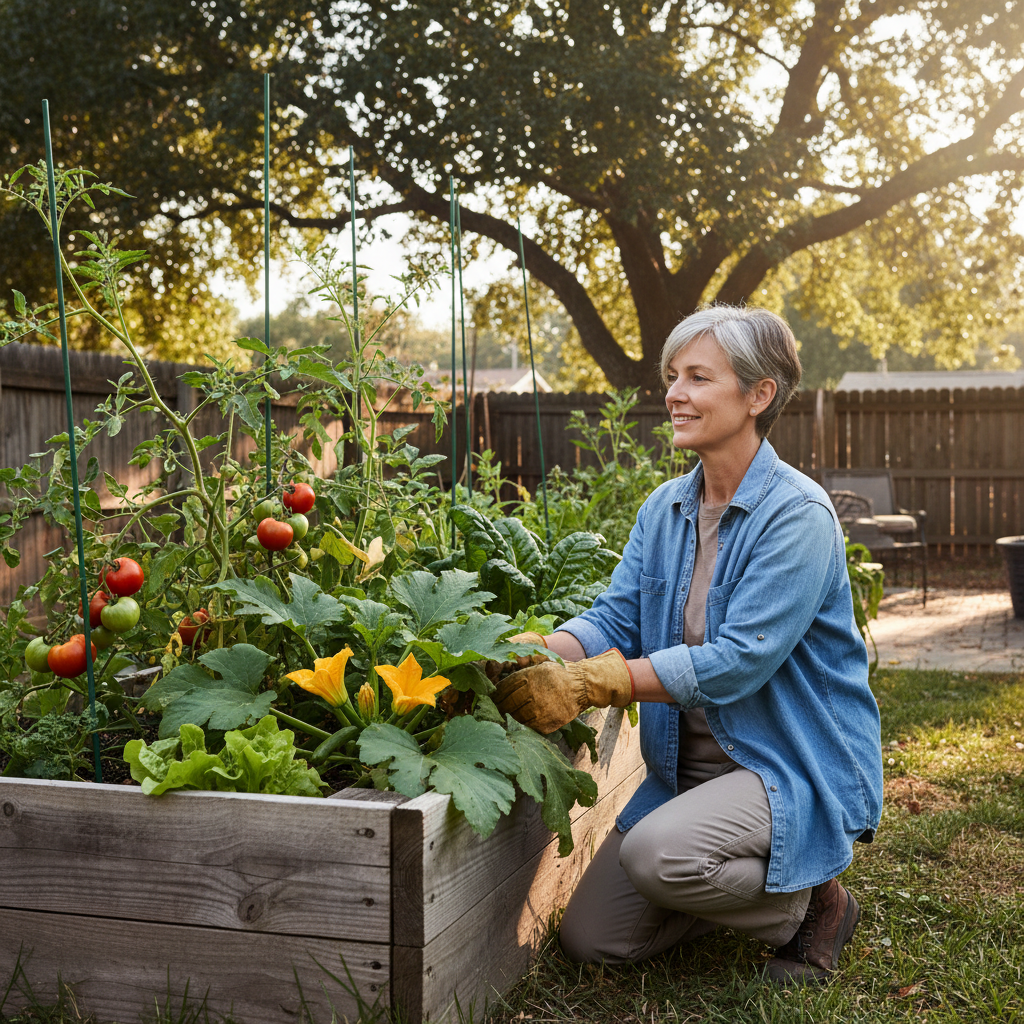
I tried again at 54, with almost no planning, a single raised bed I bought as a kit, and the radical decision to plant what the hardware store had in stock that particular Saturday morning.
Everything grew. I haven't stopped gardening since.
What Changed Between 35 and 54
The obvious answer is that I changed. But I want to be more specific than that, because I think what shifted has implications beyond gardening.
In my 30s, I was outcome-oriented to a fault. The garden was a project with deliverables. Success meant a specific harvest. Failure meant I'd done it wrong. When the plants didn't cooperate with my plan, the plan had failed.
By my 50s, something had loosened in me. Not ambition, exactly. I still cared about doing things well. But the rigidity had softened. I'd been a high school counselor for many years by then, and I had watched enough students learn that the plan rarely survives contact with reality, and that the people who did best were the ones who stayed curious and adaptive rather than brittle and attached.
I brought that posture to the garden. When the tomatoes got blight, I learned about companion planting and tried again. When the herbs overcrowded each other, I divided them and gave the extras to neighbors. When something failed, I asked it a question instead of issuing a verdict.
The garden rewarded this change in disposition almost immediately.
What Gardening Actually Does for the Body and Mind
I wasn't surprised, when I started reading the research, to find that gardening is one of the most reliably studied beneficial activities for adults across midlife and beyond.
A comprehensive review published in Preventive Medicine Reports analyzed over eighty studies on gardening and health and found consistent associations with reduced depression and anxiety, lower BMI, increased life satisfaction, and improved sense of community. Gardening outdoors combines physical activity, exposure to natural light, sensory engagement, and purposeful work. Four things that independently improve wellbeing, delivered in a single morning in the backyard.
There is also research on a specific bacterium, Mycobacterium vaccae, found in healthy garden soil, which appears to trigger the release of serotonin in the brain when inhaled or absorbed through the skin. The dirt itself, the science suggests, may literally make you feel better.
I did not know this when I started. I just knew that mornings in the garden were the best part of my day.
The Social Garden
What I also didn't expect was the community that gardening opened.
I started bringing extra produce to work, zucchini, which, as any gardener knows, produces in quantities that border on aggressive. Then herbs. Then tomatoes. Colleagues started asking questions. Questions became conversations. Conversations became a lunchtime trade of seeds and cuttings and recipe ideas.
When I joined the local community garden the following year, I found people ranging in age from late 20s to early 80s, all growing things, all willing to stop and explain what they were doing and why. I learned more about plants from those conversations than from any book.
I found, in my 50s, that gardening is one of the few activities where being a beginner is an asset. Nobody expects you to already know. Everyone is delighted to tell you what they've figured out. It's a generous community.
What the Garden Keeps Teaching Me
I am 67 now, and I have learned things from the garden that I could not have learned any other way.
I've learned that some things need more time than you planned to give them. I've learned that the failures are where the interesting information lives. I've learned that plants, like people, do better when they have enough space and aren't competing too hard for the same resources.
I've learned that you cannot force the growing season. You can prepare, you can plant, you can water and tend and pay attention, but ultimately the timing is not yours to decide. There is a lesson in that which I apply, probably not often enough, to the rest of my life.
My granddaughter started a small herb pot on her apartment windowsill last spring, after I gave her some starts from mine. She texted me a photo of the first basil leaf she harvested, a little triumphant. I knew exactly how she felt.
Start small. Stay curious. Let it be slower than you think it should be.
The garden always gives back more than you put in.